

Sustainability · 2025
In this section56 topics
- Sustainability Policy3 items
- Sustainability Goals & UN SDGs4 items
- Policy Review4 items
- Business Value Chain1 item
- Stakeholder Analysis2 items
- Environmental Sustainability — Overview1 item
- Environmental Policy & Guidelines4 items
- Environmental Policy Review3 items
- Energy Management — Overview1 item
- Energy — Plan & Guidelines3 items
- Energy — Electricity Consumption1 item
- Energy — Fuel Consumption1 item
- Energy — Targets2 items
- Energy — Performance & Outcomes2 items
- Water — Plan & Guidelines2 items
- Water — Withdrawal, Discharge & Consumption1 item
- Water — Targets2 items
- Water — Performance & Outcomes2 items
- Waste — Plan & Guidelines2 items
- Waste — Generation, Disposal & Recycling1 item
- Waste — Targets2 items
- Waste — Performance & Outcomes2 items
- GHG — Plan & Guidelines2 items
- GHG — Emissions2 items
- GHG — Emissions Verification3 items
- GHG — Principles & Standards1 item
- GHG — Targets1 item
- GHG Targets — Net Zero1 item
- GHG Targets — Carbon Neutrality1 item
- GHG — Performance & Outcomes2 items
- Environmental Legal Incidents2 items
- Social Sustainability — Overview2 items
- Social Policy & Guidelines4 items
- Social Policy Review1 item
- Social — Principles & Standards Practised2 items
- Human Rights Due Diligence3 items
- Employee Management — Overview1 item
- Employees — Plan & Guidelines4 items
- Employees — Workforce2 items
- Employees — Remuneration & Provident Fund1 item
- Employees — Training & Development2 items
- Employees — Occupational Health & Safety2 items
- Employees — Labour Relations2 items
- Employees — Employee Representation3 items
- Employees — Targets2 items
- Employees — Performance & Outcomes2 items
- Customer Management — Overview1 item
- Customers — Plan & Guidelines3 items
- Customers — Satisfaction Results2 items
- Customers — Targets2 items
- Customers — Performance & Outcomes2 items
- Community & Social — Overview1 item
- Community & Social — Plan & Guidelines4 items
- Community & Social — Targets3 items
- Community & Social — Performance & Outcomes2 items
- Law Violation Incidents1 item
Sustainability Policy
Introduction
Demco is committed to advancing sustainable business management by applying the Sufficiency Economy Philosophy of His Majesty King Bhumibol Adulyadej The Great to the Company’s governance and operations. This philosophy emphasizes moderation, reasonableness, and the building of resilience, underpinned by knowledge and integrity. Guided by a balanced approach and prudent decision-making under good corporate governance, Demco’s ultimate goal is long-term sustainability—creating shared value across economic, social, and environmental dimensions throughout the Company’s value chain.
To further strengthen sustainable development, the Board of Directors has established the Company’s Sustainability Development Policy and adopted relevant international practices, together with a sustainability strategy aimed at enhancing business competitiveness and creating value for all stakeholder groups. These principles serve as the guiding approach for the Demco Group’s operations. Further details of the “Sustainability Development Policy” are available on the Company’s website (click here).
Has a Sustainability Policy
Yes
Policy Description
Demco has established the Company’s Sustainability Development Policy as a guiding framework for conducting business responsibly and transparently throughout the value chain, while promoting shared value creation for all stakeholder groups. The policy covers the following key areas:
Good Corporate Governance
Uphold strong governance principles with transparency, fairness, and accountability; foster awareness of GRC (Governance, Risk and Compliance); and integrate digital technologies to enhance operational efficiency.Health, Safety, and Human Rights
Establish management systems that prioritize the health and safety of employees and workers, respect human rights across the supply chain, and ensure non-discrimination.Environmental Responsibility
Reduce greenhouse gas (GHG) emissions, promote efficient resource utilization, apply circular economy concepts, and invest in environmentally friendly businesses.Economic Development and Innovation
Enhance organizational efficiency and promote innovation and technology to create added value and support long-term sustainability.Social and Community Development
Develop employee capabilities, strengthen community engagement, and collaborate with the public sector, private sector, and civil society.Transparent Disclosure
Disclose sustainability performance in accordance with international standards and communicate relevant information to stakeholders.Corporate Culture
Embed organizational values by promoting integrity, ethics, and responsibility toward society and the environment through continuous training and communication.In this regard, directors, executives, and employees at all levels are responsible for supporting and implementing this policy to ensure that Demco’s business grows steadily and sustainably across all dimensions.
Sustainability Goals & UN SDGs
Introduction
Demco places strong emphasis on balancing business operations with responsibilities toward society, the environment, and stakeholders. With a commitment to sustainable business growth, the Company has established clear sustainability goals covering key economic, social, and environmental dimensions. These goals support the United Nations Sustainable Development Goals (SDGs) and respond to stakeholders’ long-term expectations.
Has Sustainability Goals
Yes
Goals Description
Strategy and Pathway to Sustainability Development
Within the Company’s sustainability development framework, the Board of Directors has set the strategic direction for business operations and expansion to support the transition toward a Smart Energy Service Business. The Company applies a materiality assessment process to address future challenges, while continuously focusing on stakeholder value creation.
To achieve Demco’s sustainability vision—centered on strengthening the organization in line with its capabilities and long-term operating plans—Demco conducts business based on a balanced management approach. This includes enhancing resilience and sustainable growth alongside responsibility for economic, social, and environmental dimensions, as well as good corporate governance. The Company emphasizes sustainable business development to support tangible progress toward the United Nations Sustainable Development Goals (SDGs) as follows.
Sustainability Management Strategy (3E) for 2023–2025
Ensure Good Governance Strengthen corporate governance and internal transparency, and build confidence in effective governance to ensure that all activities are transparent, fair, and auditable throughout the supply chain. Promote GRC (Governance, Risk and Compliance) awareness, enhance business resilience and growth through the application of digital technologies in work processes, strengthen partner and customer capabilities, and uphold ethical business practices as a foundation for sustainable development.
Engage Society Maintain employee engagement while creating value for communities and society. Establish robust health and safety management for employees and workers across work processes, and promote business practices that respect human rights throughout the supply chain to support shared long-term growth.
Enhance Environmental Elevate environmental management in alignment with global direction. Drive business growth through environmental responsibility across the value chain by focusing on greenhouse gas (GHG) reduction, efficient use of natural resources, the application of circular economy concepts, and increasing the proportion of revenue from investments in environmentally friendly businesses to support GHG reduction.
Setting targets and conducting business that supports the United Nations Sustainable Development Goals.
(Sustainable Development Goals: SDGs)
Demco is committed to sustainable growth and to contributing to the achievement of the United Nations Sustainable Development Goals (SDGs). To ensure that the Company’s operations appropriately align with the SDGs—consistent with Demco’s vision, strategic plans, material sustainability topics, and stakeholder expectations—Demco has identified six priority SDGs out of the 17 goals, namely:
SDG 7: Affordable and Clean Energy
SDG 8: Decent Work and Economic Growth
SDG 9: Industry, Innovation and Infrastructure
SDG 12: Responsible Consumption and Production
SDG 13: Climate Action
SDG 16: Peace, Justice and Strong Institutions
These goals have been integrated into existing initiatives currently underway and will be further supported through future action plans to ensure that Demco continues to operate in line with international direction, delivers benefits to all stakeholder groups, and contributes to the achievement of these goals over the long term.
UN Sustainable Development Goals
| SDG Goal |
|---|
| Goal 7 Affordable and Clean Energy |
| Goal 7 Affordable and Clean Energy |
| Goal 8 Decent Work and Economic Growth |
| Goal 8 Decent Work and Economic Growth |
| Goal 9 Industry, Innovation and Infrastructure |
| Goal 9 Industry, Innovation and Infrastructure |
| Goal 12 Responsible Consumption and Production |
| Goal 12 Responsible Consumption and Production |
| Goal 13 Climate Action |
| Goal 13 Climate Action |
| Goal 16 Peace, Justice and Strong Institutions |
| Goal 16 Peace, Justice and Strong Institutions |
Policy Review
Introduction
In 2025, Demco revised and expanded its sustainability targets across multiple dimensions to align with the Company’s vision and mission, which emphasize operating in accordance with sustainable development principles, while also responding to changes in the economic, social, and environmental context at both national and international levels. The 2025 sustainability targets were designed to support Thailand’s Net Zero Emissions ambition and to align with the United Nations Sustainable Development Goals (SDGs). In this regard, Demco established a total of 39 sustainability KPIs for 2025, covering all key dimensions—economic, social, and environmental.
In addition, sustainability KPIs were incorporated as one of the key performance indicators used in the annual performance evaluation of senior executives, reflecting the Company’s commitment to driving sustainability in a tangible manner. These targets were approved by the Board of Directors at Meeting No. 6/2024 on 24 December 2024, representing another important milestone in strengthening sustainability across all dimensions and advancing the Company’s growth alongside long-term value creation for stakeholders.
Policy Reviewed This Year
Yes
Policy Changed This Year
Yes
Review Details
In 2025, Demco revised and expanded its sustainability management targets across multiple dimensions to further strengthen its commitment to sustainable development, as follows:
Climate Management
Added a target to register the Company’s carbon credit trading scheme
Environmental Management
Added a target to increase the volume of waste and discarded materials recycled by 5% compared with 2024
Added a target to reduce food waste by 5% compared with 2024
Biodiversity
Added a target requiring 100% of construction projects initiated in 2025 to undergo biodiversity risk assessment
Environmentally Friendly Construction Materials
Design and construct energy-efficient substation buildings and specify construction materials free from hazardous substances for two projects per year
Good Corporate Governance
Added a target of zero warning letters, allegations, or penalties from relevant regulatory authorities
Business Ethics and Anti-Corruption Measures
Renew membership in the Thai Private Sector Collective Action against Corruption (CAC) and maintain continuous CAC membership status
Employee knowledge assessment results from conflict of interest training to exceed 80%
Innovation-Driven Change Management
At least three innovation initiatives to be further developed and implemented in practice within the organization per year
Risk Management
Added a target requiring 100% of new projects initiated in 2025 to undergo risk assessment in accordance with the Company’s manual prior to commencement
These revised targets reflect Demco’s intention to strengthen sustainability across all dimensions—environmental, social, and governance—while focusing on creating positive and continuous impacts for stakeholders and communities.
Business Value Chain
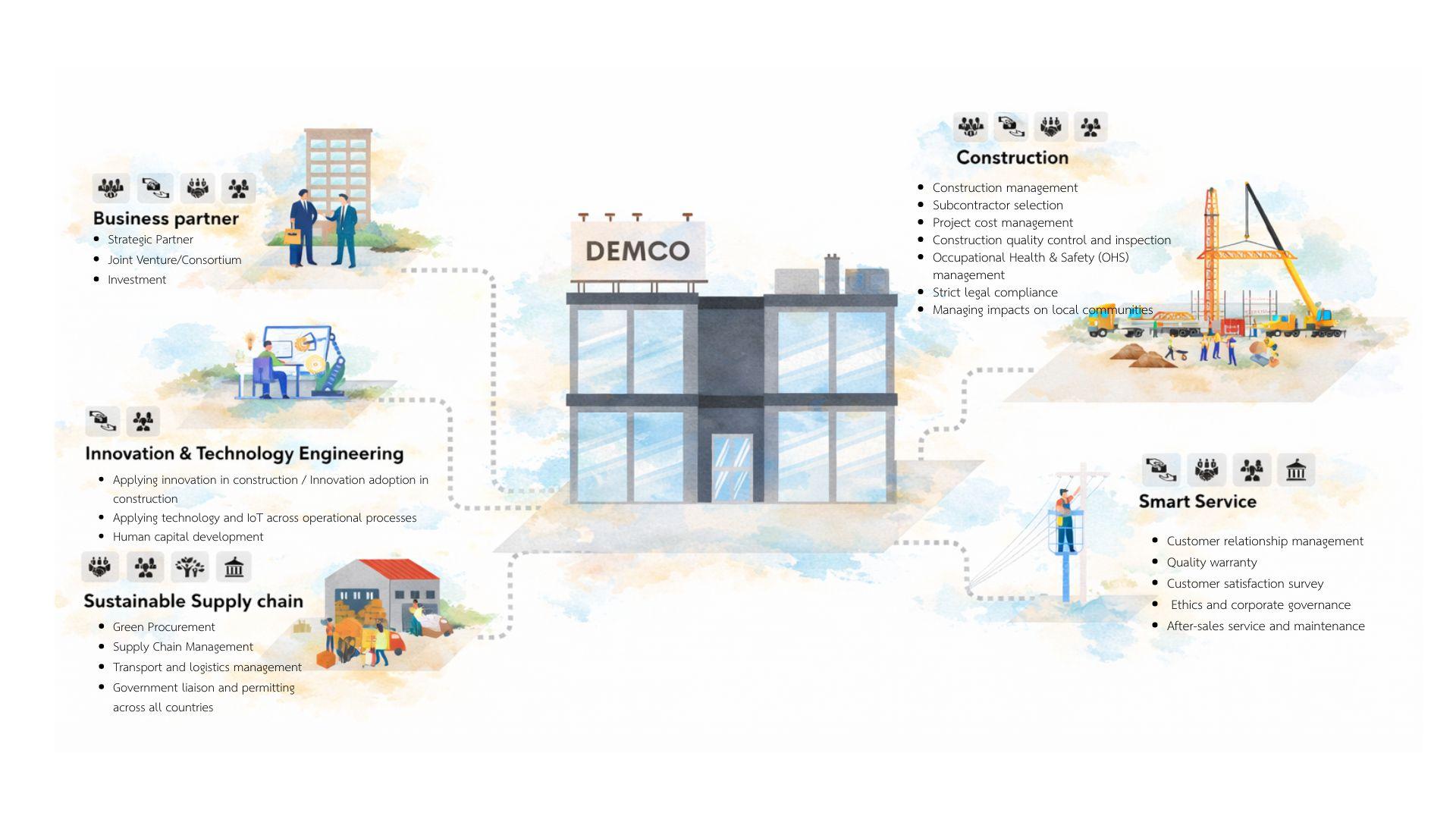
Value Chain Description
Across the value chain—from upstream to downstream—businesses face a range of sustainability challenges in both social and environmental dimensions, which can affect operations and become key risks or opportunities. Accordingly, sustainability considerations must be integrated into corporate policies and strategies, including good corporate governance and responsible business conduct toward stakeholders, society, and the environment, and be implemented through a structured, results-oriented approach.
The core of driving sustainability is the participation of everyone in the organization—from directors and executives to employees—in advancing the business and ensuring sustainable growth. This enables stakeholders to have confidence that Demco operates on the foundation of good corporate governance, demonstrates responsibility toward society and the environment, and is capable of managing material sustainability issues to maintain competitiveness and strengthen growth potential, even as the business environment continues to evolve.
Stakeholder Analysis
Introduction
Demco recognizes stakeholder engagement as a fundamental pillar of good corporate governance and a key mechanism for strengthening its understanding of stakeholder needs. Stakeholder engagement serves as an approach to conducting business that enables ongoing communication with Demco’s stakeholders and provides insights into their expectations, needs, concerns, and potential impacts. Such information is then analyzed to identify material issues for Demco’s sustainability development. Demco has established the following stakeholder engagement process:
Stakeholder Identification – Identify stakeholder groups by assessing the impacts they may experience from, or generate for, Demco.
Stakeholder Prioritization – Analyze and prioritize stakeholder groups with which Demco should engage, and define appropriate measures for engaging key stakeholder groups.
Stakeholder Engagement – Engage stakeholders through appropriate methods and communication channels.
Listening – Gather feedback to clearly understand the needs and expectations of each stakeholder group.
Response – Respond effectively to stakeholder needs and expectations.
Risk and Opportunity Management – Identify and manage risks and opportunities arising from stakeholder engagement.
Monitoring and Continuous Improvement – Monitor outcomes and continuously improve the stakeholder engagement process.
In addition to engaging external stakeholders, Demco also places importance on engaging internal stakeholders to strengthen collaboration among functions at all organizational levels, which is a critical component in advancing the Company’s sustainable development.
Stakeholder Analysis
| Stakeholder Type | Stakeholders | Stakeholder Expectations | Response to Expectations | Communication Activities |
|---|---|---|---|---|
| External stakeholders | 2894 · Description: Creditor · 2904 · Description: Investors or investment institutions · 2913 · Description: Shareholders | • Deliver strong performance and pay dividends.
• Expand and develop the business with stability and sustainable growth.
• Conduct business with transparency and good corporate governance.
• Treat all shareholders equally.
• Have a good internal control and audit system.
• Have an effective risk management system.
• Conduct business with consideration for environmental, social, and governance (ESG) factors.
• Disclose the company’s operational performance in terms of finance, environment, society, and governance (ESG). | • Good Corporate Governance.
• Risk Management and Compliance.
• Stability and Project Readiness.
• Communication and Credibility Building.
• Disclosure of the Company's Performance in Financial, Environmental, Social, and Governance (ESG) Aspects.
• Engagement with Financial Institutions, Both Bank and Non-Bank, to Communicate Business Direction. | 2941 · Description: Online Communication · 2944 · Description: Annual General Meeting (AGM) · 2949 · Other name: Announcement of Quarterly Financial Results. · Description: Others · 2949 · Other name: Meetings with analysts / investors through various activities such as Opportunity Day. · Description: Others · 2949 · Other name: Risk Management and Control System. · Description: Others |
| External stakeholders | 2923 · Description: Customers | • Deliver products/services in accordance with contractual requirements in terms of both quantity and quality.
• Respond promptly and efficiently to customer needs.
• Treat all customer groups fairly and equally in compliance with applicable laws and regulations.
• Develop and adopt technologies to reduce environmental impacts.
• Prepare and upskill employees to respond effectively to changing circumstances.
• Safeguard and protect customers’ confidential information. | • Control production and delivery to meet contractual requirements, with quality standards that customers can trust.
• Maintain dedicated teams ready to provide service and resolve issues promptly to achieve the highest customer satisfaction.
• Conduct business transparently and uphold fairness and equality to serve all customer groups equitably.
• Develop modern products and services to better meet customers’ needs.
• Listen to customer feedback and continuously improve based on their input. | 2945 · Description: Complaint Reception · 2947 · Description: Satisfaction Survey · 2949 · Other name: Team building activities · Description: Others · 2949 · Other name: Company's Annual Report / Sustainability Report · Description: Others · 2949 · Other name: Company website · Description: Others |
| External stakeholders | 2898 · Description: Competitors · 2899 · Description: Suppliers · 2900 · Description: Business partners · 2918 · Description: Contractors | • Conduct business competition fairly.
• Operate ethically and in accordance with good corporate governance principles.
• Ensure fair, transparent, and non-discriminatory competition.
• Communication with business partners/suppliers.
• An efficient, transparent, and auditable procurement system.
• Safety of business partner employees and contractors/subcontractors. | • Establish clear policies and measures to ensure transparent and fair competition.
• Provide equal opportunities for all business partners based on capability and quality, applying fair and standardized supplier/partner selection criteria.
• Set up clear communication channels, such as the website, email, or an online platform for updates and information.
• Define clear safety standards for operations across all projects. | 2945 · Description: Complaint Reception · 2949 · Other name: Supplier Evaluation and Ranking. · Description: Others · 2949 · Other name: Annual Vendor Evaluation. · Description: Others · 2949 · Other name: Policy / Code of Conduct and Supplier Guidelines. · Description: Others |
| External stakeholders | 2931 · Description: Government agencies and Regulators | • Compliance with regulations, rules, laws, and policies of regulatory agencies
• Social and environmental responsibility
• Sustainable community engagement
• Environmental and safety management system
• Cooperation and support for government agency projects
• DEMCO's operations that contribute to mitigating climate change | • Strictly comply with the laws and regulations of the Stock Exchange of Thailand.
• Cooperate and support relevant agencies by providing accurate, complete, and beneficial information to the country and the public.
• Report information completely, accurately, and within the specified timeframe to demonstrate transparency and adhere to legal requirements.
• Promote participation in projects or activities that support sustainable development in accordance with government policies.
• Establish ethical standards for employees and executives to prevent any actions that may violate laws and organizational regulations. | 2948 · Description: Training / Seminar · 2949 · Other name: Meetings/Visits on Important Occasions. · Description: Others · 2949 · Other name: Company website. · Description: Others |
| Internal stakeholders | 2921 · Description: Employees | • Employee well-being, including health and safety in the workplace.
• Competitive compensation and benefits.
• Career growth and job security.
• A fair performance evaluation system.
• Employee capability and skills development. | • Establish a Welfare Committee to oversee and enhance employee welfare and benefits.
• Regularly review and improve compensation and benefits.
• Provide a safe and suitable working environment.
• Set clear and fair performance evaluation criteria.
• Develop career progression plans.
• Provide training and skills development programs for employees.
• Promote employee engagement and organizational commitment.
• Conduct regular employee satisfaction surveys.
• Provide channels for employees to share feedback and express opinions.
• Continuously ensure employee health and safety.
• Treat all employees equally and respect everyone’s dignity. | 2945 · Description: Complaint Reception · 2946 · Description: Employee Engagement Survey · 2949 · Other name: HR Change Management Program. · Description: Others · 2949 · Other name: Internal communications via the intranet, email, website, and the DEMCO Journal. · Description: Others · 2949 · Other name: Employee Welfare Committee. · Description: Others · 2949 · Other name: Grievance and complaint submission through DEMCO’s grievance mechanism via multiple channels. · Description: Others · 2949 · Other name: Management–employee engagement meetings to enable leadership dialogue with employees. (e.g., Manager Forum, Town Hall Meeting, Safety Talk) · Description: Others |
| External stakeholders | 2902 · Description: Community · 2928 · Description: Society · 2936 · Other name: Environment · Description: Others | • Manage and reduce potential social and environmental impacts arising from DEMCO’s operations.
• Operate safely with strong environmental responsibility.
• DEMCO employees foster a sense of social and environmental responsibility.
• Strengthen community and social engagement with DEMCO.
• Provide continuous support for community activities on a regular basis.
• Enhance community understanding of DEMCO’s operations.
• Create employment opportunities for local community members to work with DEMCO. | • Conduct business with due consideration for impacts on the environment and local communities.
• Build positive relationships with communities around construction sites and the head office.
• Organize CSR activities that promote community development, such as tree-planting projects, vocational skills training, and youth education initiatives.
• Support community and social activities, focusing on the development of society, communities, and the environment, including public-benefit initiatives.
• Provide channels for feedback and complaints.
• Promote employees’ awareness of social and environmental responsibility. | 2940 · Description: Social Event · 2945 · Description: Complaint Reception · 2949 · Other name: Community assistance. · Description: Others |
Environmental Sustainability — Overview
Introduction
Significance
In 2025, the Demco Group remained committed to conducting business while continuously pursuing opportunities to expand investments in environmentally friendly businesses. The Group places emphasis on developing renewable energy investments—namely wind, solar, and biomass—to help reduce reliance on fossil fuels, which are a major source of air pollution and a key contributor to global warming. In parallel, the Demco Group’s steel lattice tower manufacturing facility places strong focus on environmental management throughout the production process. Operations are managed under an ISO 14001 environmental management system to systematically control and mitigate environmental impacts, while promoting efficient operations in alignment with sustainable development principles.
In this regard, the Demco Group’s management approach is guided by responsibilities across three core dimensions—Environment, Social, and Governance (ESG)—to strengthen organizational resilience and support stable, sustainable long-term growth.
Environmental Policy & Guidelines
Introduction
Over the past year, the Demco Group continued to place strong emphasis on environmental conservation and sustainable development by integrating social and environmental responsibility into all operational processes—from planning and execution to ongoing monitoring and evaluation. Demco seeks to deliver tangible reductions in environmental impacts through efficient resource utilization, waste reduction and segregation, pollution prevention, and the promotion of environmentally friendly practices across operational sites, together with engagement with relevant communities.
In addition, Demco has communicated its environmental policies and practices broadly to employees at all levels to strengthen awareness of shared roles and responsibilities. The Company also supports behavioral and operational adjustments that help balance business growth with the conservation of natural resources, with the aim of continuously enhancing environmental performance in a sustainable manner over the long term.
Has an Environmental Policy
Yes
Policy Description
Environmental Policy
Demco has enhanced its environmental management practices in line with global trends, aiming to drive business growth through environmental responsibility across the entire value chain. Key priorities include reducing greenhouse gas (GHG) emissions, using natural resources efficiently by applying circular economy concepts, and increasing the proportion of revenue from investments in environmentally friendly businesses to support GHG reduction. Demco has also established sustainable development goals to contribute to the United Nations Sustainable Development Goals (SDGs), with key environmental focus areas aligned with SDGs 7 (Affordable and Clean Energy), SDG 12 (Responsible Consumption and Production), and SDG 13 (Climate Action).
Environmental Practices
Demco is committed to conducting business responsibly toward the environment, guided by the principles of preventing adverse impacts and maximizing resource efficiency. The Company implements an integrated environmental management system covering energy use, air quality, water consumption, and waste management. It also promotes efficient and sustainable resource use in accordance with the Circular Economy approach to enhance resource efficiency across the supply chain, reduce GHG emissions, and strengthen climate change resilience.
Demco further emphasizes minimizing environmental burdens arising from operations and construction projects, including pollution, safety-related environmental impacts, and visual pollution that may affect work sites, surrounding communities, and local authorities. Appropriate preventive and control measures are implemented in accordance with the context of each area. In addition, Demco fosters a culture of environmental responsibility within the organization through ongoing communication, knowledge sharing, and initiatives that encourage employees and relevant stakeholders to maintain continuous environmental awareness and participation.
Demco strictly complies with applicable environmental laws and regulations and establishes policies and practices under its environmental management system to ensure that operations are conducted properly and transparently.
Environmental Guidelines
| Guideline |
|---|
| Electricity Management |
| Fuel Management |
| Water Management |
| Waste Management |
| Biodiversity Management |
| Greenhouse Gas and Climate Change Management |
Environmental Policy Review
Policy Reviewed This Year
Yes
Review Details
In 2025, Demco revised its environmental management targets to further strengthen its commitment to sustainable development, as follows:
Environmentally Friendly Construction Materials
Design and construct energy-efficient substation buildings and specify construction materials free from hazardous substances, with a target of two projects per year
Environmental Management
Increase the volume of waste and discarded materials recycled by 5% compared with 2024
Reduce food waste by 5% compared with 2024
Biodiversity
Ensure that 100% of construction projects initiated in 2025 undergo biodiversity risk assessment
Climate Change Management
Register a carbon credit trading project (a grouped T-VER project, one project) in accordance with the plan, to support the reduction of environmental impacts
Policies & Guidelines Changed
| Change | Other — Please Specify |
|---|---|
| Electricity Management | |
| Fuel Management | |
| Water Management | |
| Waste Management | |
| Biodiversity Management | |
| Greenhouse Gas and Climate Change Management | |
| Other | Environmentally friendly construction materials |
Energy Management — Overview
Introduction
Energy Management Approach
Energy demand continues to rise steadily, as energy remains a critical driver of business operations and daily life in modern society. Demco recognizes the importance of efficient energy use and is committed to managing energy consumption within the organization to promote sustainable energy conservation. The Company has established clear policies and practices for energy management, focusing on prudent and efficient energy use while advancing clean energy technologies and innovation to strengthen energy management capabilities and support long-term sustainable growth.
In addition, Demco monitors performance through key indicators aligned with international standards to reinforce its commitment to energy efficiency and to promote continuous improvement in energy management and conservation. These efforts form an important part of maintaining a balance between business growth and long-term environmental stewardship.
Energy — Plan & Guidelines
Introduction
Energy Management Plan
Demco recognizes the importance of efficient energy use as a key factor in supporting sustainable development and reducing environmental impacts. The Company is therefore committed to developing a comprehensive energy management process based on energy conservation principles, the use of renewable energy, and continuous improvements in energy efficiency across all areas of operations. These efforts are designed to align with international standards and the Company’s sustainability objectives.
Has an Energy Management Plan
Yes
Plan Description
Actions to Reduce Energy Consumption
Demco places strong emphasis on efficient electricity management by implementing measures to reduce energy consumption and improve sustainable operational processes, including:
Promoting optimal energy use and reducing consumption within the organization
For example, Demco conducts ongoing energy-saving campaigns to raise awareness of prudent resource use and sets designated on/off schedules for lighting in the headquarters building to enhance energy efficiency.Raising awareness and engaging employees and contractors
Demco communicates energy conservation practices, organizes awareness activities, and establishes practical guidelines for workplaces and project sites to ensure continuous implementation.Expanding renewable energy use through solar power
Demco plans to install additional solar power generation systems beyond the existing 265 kWp capacity at the Pathum Thani office, to increase the proportion of renewable energy consumption, reduce reliance on grid electricity, and lower greenhouse gas (GHG) emissions. This supports the Company’s long-term Net Zero Emissions ambition. The project reflects Demco’s commitment to sustainable business development by reducing dependence on non-renewable energy sources, promoting clean energy use, and continuously supporting environmental conservation over the long term.
Energy — Electricity Consumption
Electricity Consumption
| Metric | Current Year | Previous Year | Two Years Ago |
|---|---|---|---|
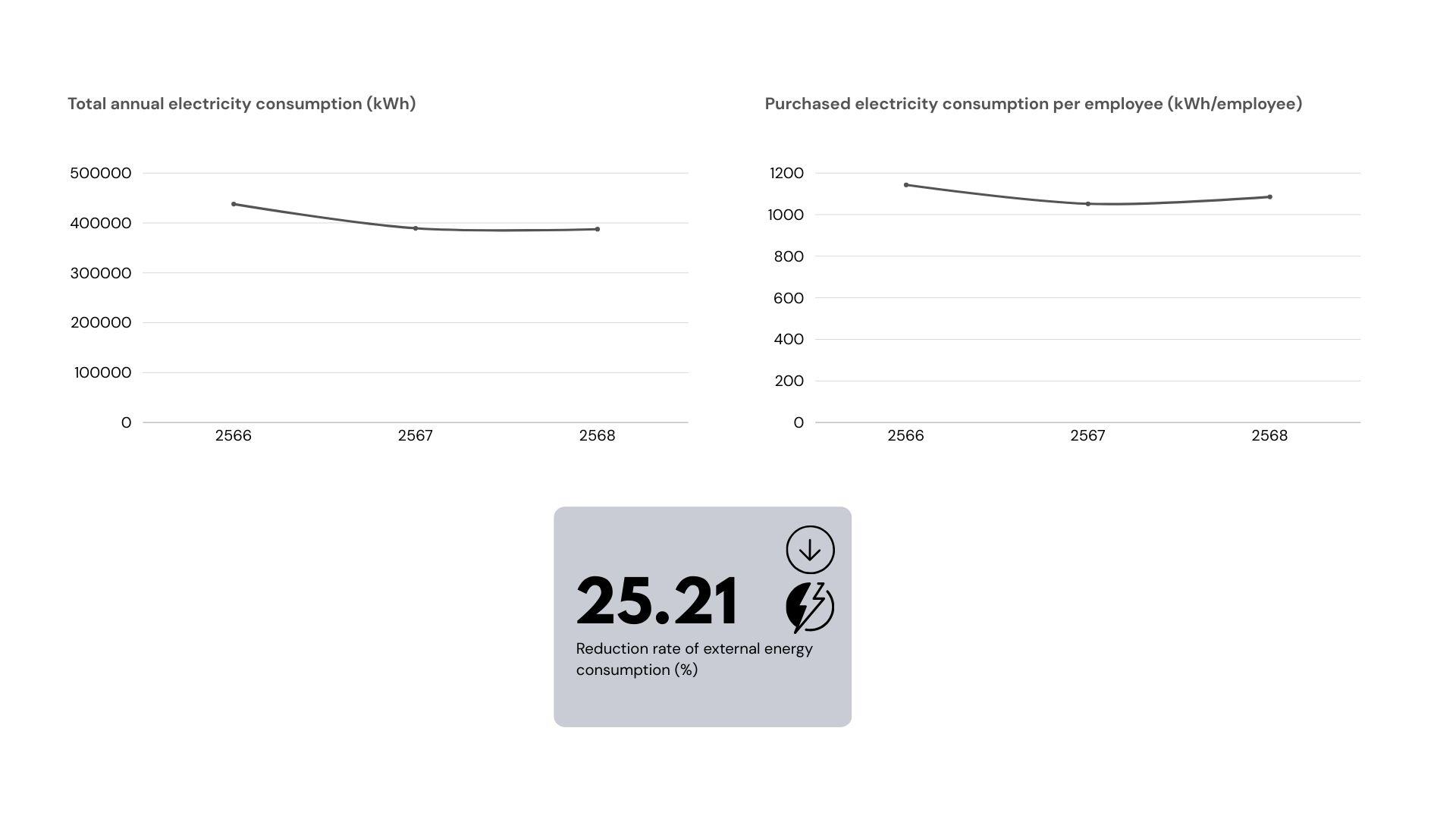
| Total electricity consumption within the organization (Kilowatt-Hours) | 387,538 | 389,264 | 437,864 |
| Electricity purchased for consumption from non-renewable energy sources (Kilowatt-Hours) | 276,592 | 389,264 | 437,864 |
| Electricity purchased or generated for consumption from renewable energy sources (Kilowatt-Hours) | 110,946 | 0 | 0 |
Energy — Fuel Consumption
Fuel Consumption
| Metric | Current Year | Previous Year | Two Years Ago |
|---|---|---|---|
| Crude oil (Barrels) | |||
| Coal (Metric tonnes) | |||
| Jet fuel (Litres) | |||
| Diesel (Litres) | 32,330.68 | 35,879.38 | 21,794.89 |
| Gasoline (Litres) | 11,068.43 | 6,681.04 | 6,861.9 |
| Fuel oil (Litres) | |||
| Natural gas (Standard cubic feet) | |||
| LPG (Kilograms) | 34 | 49 | 45 |
| Steam (Metric tonnes) |
Energy — Targets
Has Set Targets
Yes
Targets
| Target | Base Year | Base Year Value | Target Year | Target Year Value | Target Change (%) | Unit |
|---|---|---|---|---|---|---|
| Reduction of electricity purchased for consumption | 2,024 | 389,264 | 2,025 | 369,800.8 | 5 | Kilowatt-hour |
Energy — Performance & Outcomes
Has Performance Results
Yes
Performance Description
Demco set a target to reduce external energy consumption by 5.00%. In 2025, total electricity consumption amounted to 387,538 kilowatt-hours (kWh), comprising 276,592 kWh of electricity purchased from external sources (71.37%) and 110,946 kWh generated from renewable energy (28.63%). Electricity consumption from external sources per employee was 1,085.57 kWh, representing a slight increase from the previous year. This change was attributable to higher operational activities and business volumes during the reporting year.
Demco remains committed to continuously implementing energy management measures, including increasing the share of renewable energy, improving energy efficiency, and closely monitoring energy consumption. These efforts aim to effectively achieve the target of reducing external energy use in the coming years and to support the Company’s long-term sustainable business operations.
Water — Plan & Guidelines
Has a Water Management Plan
Yes
Plan Description
Water Management
Demco recognizes the importance of sustainable water resource management, a material issue at both national and global levels. In support of the United Nations Sustainable Development Goal 6 (SDG 6), Demco is committed to promoting quality and efficient water management, while supporting access to sufficient and standard-quality water for all sectors of society.
Amid current challenges from climate change and increasing risks of water scarcity and declining water quality, Demco emphasizes systematic water management within the organization. The Company has developed an end-to-end water management approach covering all operational stages. Key measures include controlling water quality to meet required standards prior to discharge, promoting water reuse, and conducting ongoing campaigns to encourage efficient and sustainable water use. These efforts aim to maximize water-use efficiency alongside the conservation and restoration of natural water resources, reflecting the Company’s commitment to responsible water stewardship and long-term environmental sustainability.
Demco also focuses on improving water-use efficiency by reducing consumption and enhancing water management practices in its buildings through key initiatives such as: installing water-saving fixtures, including sanitary ware and faucets certified with Thailand’s Water Saving Label No. 5 (e.g., washbasin faucets), which help limit water flow to no more than 2 liters per minute; and promoting water conservation awareness through communication materials and signage to encourage employees to use water prudently.
Water — Withdrawal, Discharge & Consumption
Water Withdrawal, Discharge & Consumption
| Metric | Current Year | Previous Year | Two Years Ago |
|---|---|---|---|
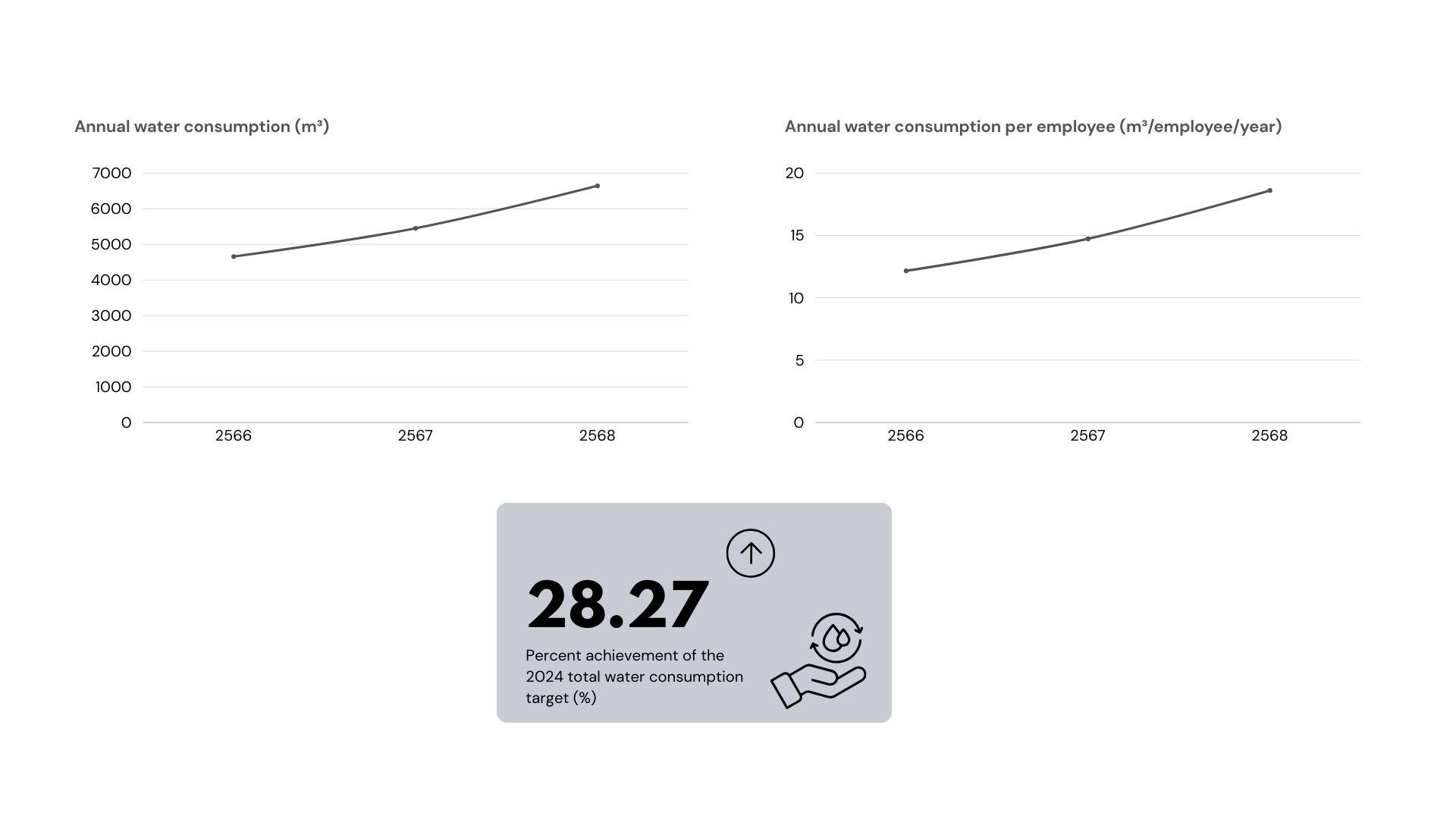
| Total water withdrawal (Cubic meters) | 6,641 | 5,450 | 4,657 |
| Total water withdrawal by third-party water (Cubic meters) | 6,641 | 5,450 | 3,530 |
| Total water withdrawal by surface water (Cubic meters) | |||
| Total water withdrawal by groundwater (Cubic meters) | 0 | 0 | 1,127 |
| Total water withdrawal by seawater (Cubic meters) | |||
| Total water withdrawal by produced water (Cubic meters) | |||
| Percentage of wastewater treated before discharge (%) | |||
| Total water discharge (Cubic meters) | |||
| Total water discharge to third-party water (Cubic meters) | |||
| Total water discharge to surface water (Cubic meters) | |||
| Total water discharge to groundwater (Cubic meters) | |||
| Total water discharge to seawater (Cubic meters) | |||
| Total water consumption (Cubic meters) | 6,641 | 5,450 | 4,657 |
| Recycled water (Cubic meters) |
Water — Targets
Has Set Targets
Yes
Targets
| Target | Base Year | Base Year Value | Target Year | Target Year Value | Target Change (%) | Unit |
|---|---|---|---|---|---|---|
| Reduction of water withdrawal | 2,024 | 5,450 | 2,025 | 5,177.5 | 5 | Cubic meters |
Water — Performance & Outcomes
Has Performance Results
Yes
Performance Description
DEMCO has set a target to reduce the water consumption intensity at its headquarters in Pathum Thani Province by 5% compared with 2024, to promote efficient resource use and continuously enhance environmental management. In 2025, DEMCO’s total water consumption amounted to 6,641 cubic meters, increasing from 5,450 cubic meters in 2024. All water consumed during the reporting year was sourced from the public water supply.
When considering water consumption per employee, the intensity was 18.60 cubic meters per person, rising from 14.65 cubic meters per person in 2024. As a result, water consumption in 2025 exceeded the target by approximately 28.3%. This change was consistent with an increase in operational activities and internal resource use.
Although performance during the reporting year did not meet the target, the Company continued to implement water control measures and efficiency improvements, such as promoting water-saving practices, inspecting for leaks in internal plumbing systems, and regularly monitoring water consumption data. These actions aim to curb the upward trend in water use and strengthen resource management efficiency in the next period.
Waste — Plan & Guidelines
Has a Waste Management Plan
Yes
Plan Description
Demco is committed to managing waste in compliance with applicable legal requirements and international standards in order to enhance resource efficiency and minimize environmental impacts throughout its business operations. The Company applies a systematic waste management approach, including ongoing monitoring, performance evaluation, and regular review of waste management practices to ensure continuous improvement and suitability. In addition, Demco emphasizes internal communication and awareness-building by integrating the 4Rs principles (Reduce, Reuse, Recycle, Replace) into day-to-day operations to improve resource efficiency and support waste reduction objectives.
Demco also advances its digital transformation to reduce resource consumption and improve operational efficiency. Technology is leveraged to minimize paper use in work processes and to promote prudent resource utilization, thereby reducing waste volumes and avoiding chemicals that may adversely affect health and the environment. Key measures include adopting paperless meetings by providing meeting materials as downloadable files via QR codes. Where printing is necessary, documents are printed double-sided and only in the required quantities. For internal meetings, Demco uses reusable glasses and water pitchers instead of plastic bottles and prohibits the use of foam food containers in all meeting-related activities.
Waste — Generation, Disposal & Recycling
Waste Generation, Disposal & Recycling
| Metric | Current Year | Previous Year | Two Years Ago |
|---|---|---|---|
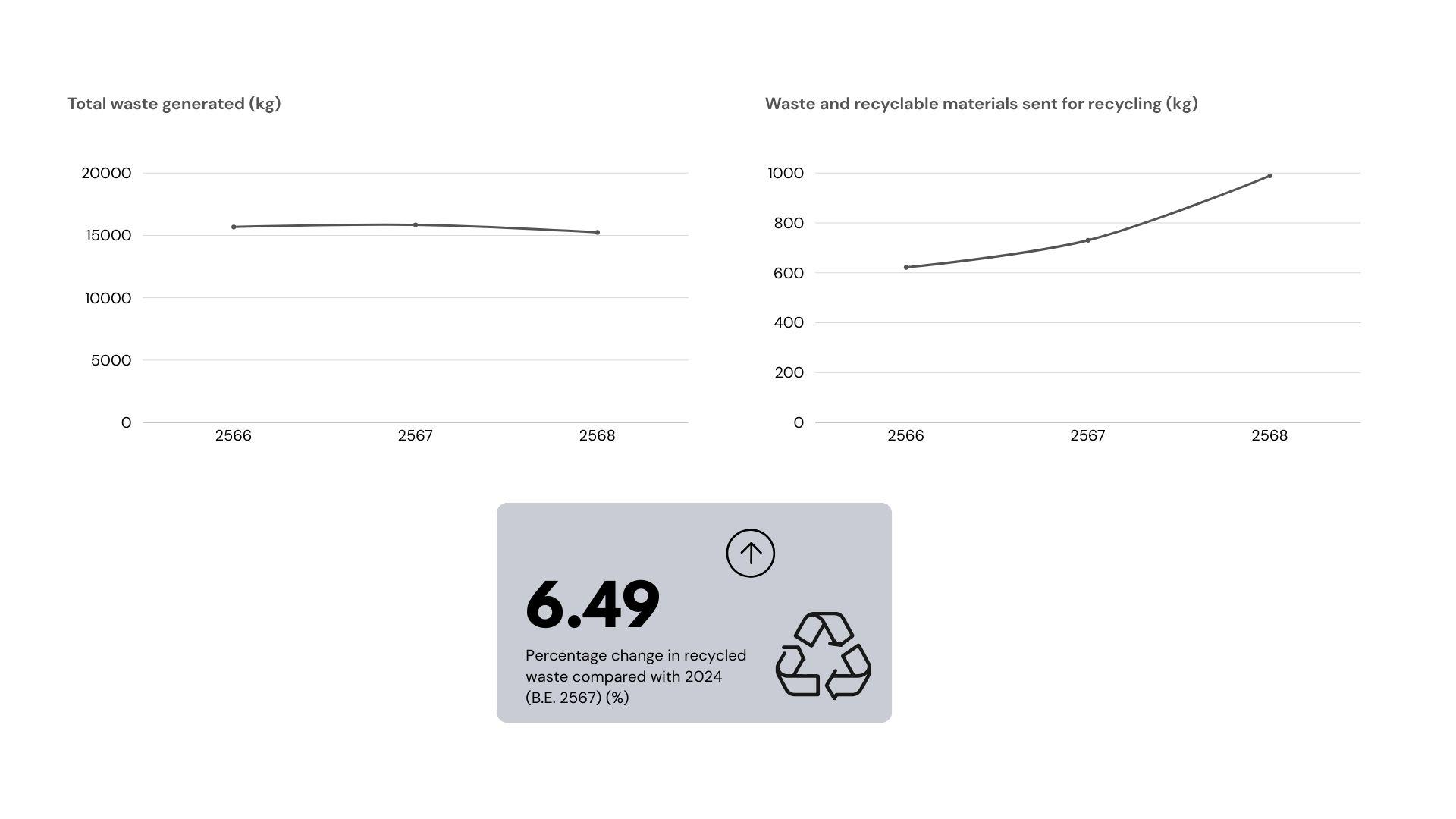
| Total waste generated (Kilograms) | 15,244.5 | 15,115.5 | 15,677.7 |
| Non-hazardous waste (Kilograms) | 15,244.5 | 15,115.5 | 15,677.7 |
| Non-hazardous waste - Landfilling (Kilograms) | |||
| Non-hazardous waste - Incineration (with energy recovery) (Kilograms) | |||
| Non-hazardous waste - Incineration (without energy recovery) (Kilograms) | |||
| Non-hazardous waste - Other disposal operations (Kilograms) | |||
| Hazardous waste (Kilograms) | |||
| Hazardous waste - Landfilling (Kilograms) | |||
| Hazardous waste - Incineration (with energy recovery) (Kilograms) | |||
| Hazardous waste - Incineration (without energy recovery) (Kilograms) | |||
| Hazardous waste - Other disposal operations (Kilograms) | |||
| Total reused/recycled waste (Kilograms) | 989 | 730.5 | 622 |
| Reused/Recycled non-hazardous waste (Kilograms) | 989 | 730.5 | 622 |
| Reused non-hazardous waste (Kilograms) | |||
| Recycled non-hazardous waste (Kilograms) | |||
| Reused/Recycled hazardous waste (Kilograms) | |||
| Reused hazardous waste (Kilograms) | |||
| Recycled hazardous waste (Kilograms) |
Waste — Targets
Has Set Targets
Yes
Targets
| Waste Type | Disposal Approach | Target | Base Year | Base Year Value | Target Year | Target Year Value | Target Change (%) | Unit |
|---|---|---|---|---|---|---|---|---|
| Non-hazardous waste | 2763 · Other name: Quantity of recyclable waste and refuse · Description: Other | Increase waste utilization | 2,024 | 15,846 | 2,025 | 767.03 | 5 | Kilograms |
Waste — Performance & Outcomes
Has Performance Results
Yes
Performance Description
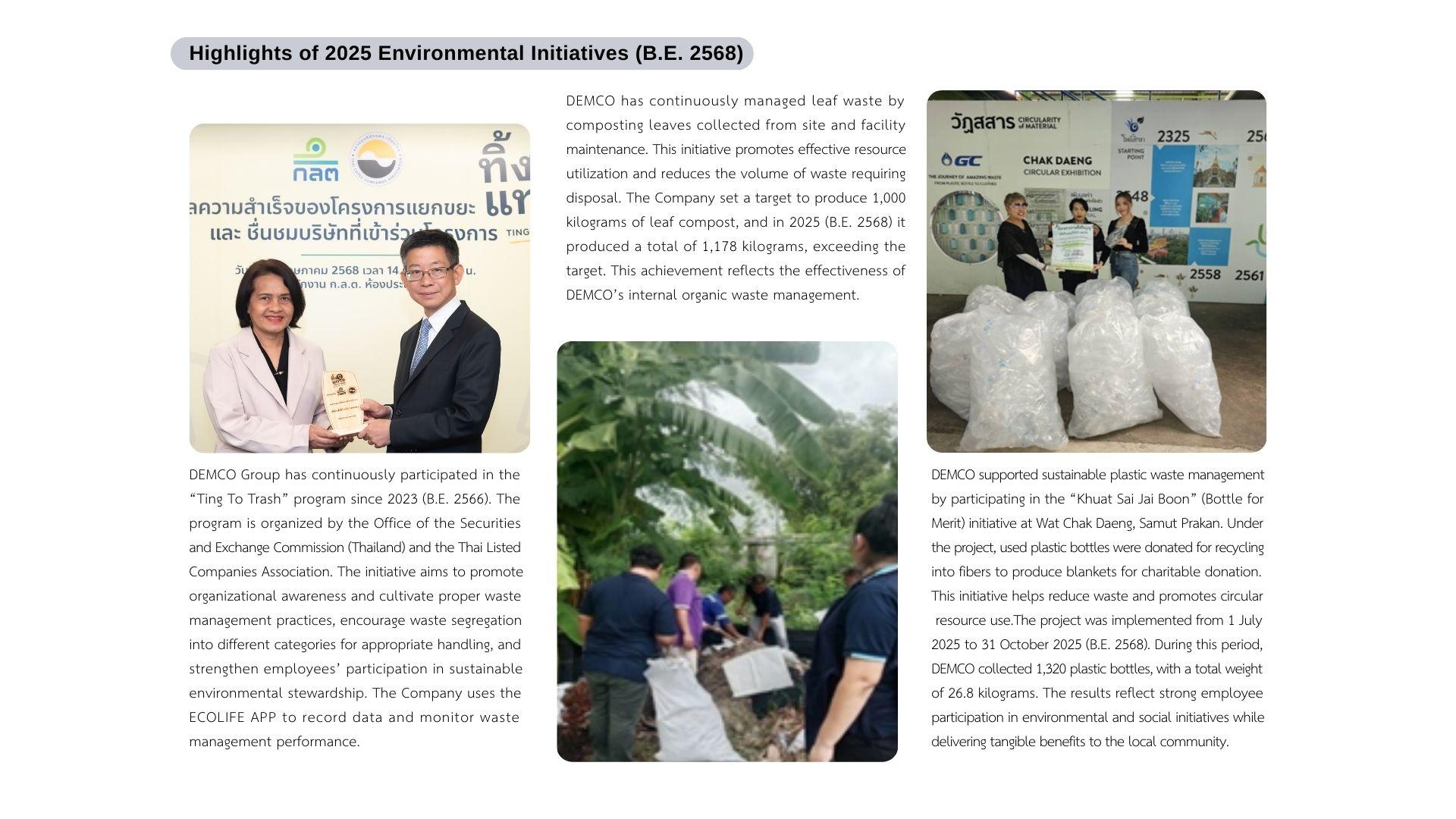
In 2025, DEMCO generated a total of 15,244.50 kilograms of waste and discarded materials, decreasing from 15,846 kilograms in 2024. This reflects a positive trend toward more effective waste management. Recycled waste totaled 989 kilograms, accounting for 6.49% of total waste, increasing from 4.61% in 2024. This performance exceeded the Company’s target to increase the recycling rate by 5% compared with the previous year, demonstrating tangible progress in promoting waste segregation and resource recovery.
In addition, 2025 marked DEMCO’s first year of collecting data and setting a target for food waste management. The Company set a target to reduce food waste by 5% compared with 2024, with a target amount of 2,562.15 kilograms. Actual food waste amounted to 595 kilograms, which was below the target—representing a reduction of 76.78% versus the target level—indicating strong effectiveness in controlling and managing food waste in the initial implementation year. DEMCO remains committed to reducing waste at the source, ensuring proper segregation, and increasing resource recovery to support efficient resource utilization and continuously minimize environmental impacts.
GHG — Plan & Guidelines
Has a GHG Management Plan
Yes
Plan Description
At present, the world is facing increasingly severe and frequent natural disasters—such as droughts, floods, and storms—as a consequence of climate change. These events affect natural resources, the economy, and supply chains, and may also disrupt the business continuity of the Demco Group. The Company is therefore committed to strengthening its preparedness to systematically manage climate-related risks and opportunities, and to align its actions with the Sustainable Development Goals (SDGs), particularly SDG 7 (Affordable and Clean Energy), SDG 12 (Responsible Consumption and Production), and SDG 13 (Climate Action).
Demco has set a target to reduce its organizational greenhouse gas emissions (Carbon Footprint of Organization: CFO) by 5% by 2028 compared with the base year. The Company focuses on improving energy efficiency, enhancing work processes to reduce resource consumption, promoting clean energy use, and monitoring performance through a data management and Measurement, Reporting and Verification (MRV) system to ensure that greenhouse gas reductions are continuous and verifiable.
GHG — Emissions
Introduction
DEMCO collected, compiled, and calculated its organizational greenhouse gas (GHG) emissions data for 2025 (2568) in accordance with the defined reporting boundaries. The reporting covers emissions at the organizational level, including direct emissions (Scope 1), indirect emissions from purchased electricity (Scope 2), and other relevant indirect emissions (Scope 3), as appropriate to the Company’s business operations.
The 2025 GHG emissions data were prepared in accordance with ISO 14064-1:2018 under a systematic data management and quality control process, with Advance Energy Plus Co., Ltd. serving as the reporting consultant. The data are currently undergoing external verification to enhance transparency, accuracy, and credibility for stakeholders, and the Company will officially disclose the verification results upon completion of the process.
In 2025 (2568), the Company’s total GHG emissions (Scopes 1, 2, and 3) amounted to 1,114 tonnes of carbon dioxide equivalent (tCO2e), decreasing from the 2023 (2566) base year total of 1,220 tCO2e, representing a reduction of 8.69% and remaining below the target set. This reflects outcomes from the systematic implementation of energy and resource management measures. By scope, Scope 1 and Scope 2 showed a significant downward trend, particularly Scope 2 emissions, which decreased as a result of improved energy efficiency and the promotion of renewable energy use. Scope 3 emissions remained broadly in line with the base year, and the Company continues to monitor data for material categories on an ongoing basis. The Company’s GHG emissions intensity was 0.5045 tCO2e per THB 1 million of revenue.
The Company’s 2025 organizational GHG emissions report is also undergoing third-party verification by Bureau Veritas Certification (Thailand) Ltd. to enhance confidence in the accuracy, transparency, and reliability of the information. Upon completion of the verification process, the Company will disclose the verification results and official assurance statement accordingly.
GHG Emissions
| Metric | Current Year | Previous Year | Two Years Ago |
|---|---|---|---|
| Total GHG emissions (Metric tonnes of carbon dioxide equivalent) | 1,114 | 1,340 | 1,220 |
| Total greenhouse gas emissions 1 (Metric tonnes of carbon dioxide equivalent) | 666 | 849 | 695 |
| Total greenhouse gas emissions 2 (Metric tonnes of carbon dioxide equivalent) | 130 | 195 | 219 |
| Total greenhouse gas emissions 3 (Metric tonnes of carbon dioxide equivalent) | 318 | 296 | 306 |
GHG — Emissions Verification
Emissions Verified by a Third Party
Yes
Verifying Body
2648
Verification Web Page
https://www.demco.co.th/en/sustainability/environmental
GHG — Principles & Standards
Principles & Standards Applied
| Standard |
|---|
| 2671 |
GHG — Targets
Has Set GHG Targets
Yes
GHG Targets — Net Zero
Net Zero Targets
| Emission Scope | TGO Certification | Base Year | Base Year Emissions | Near-term Target Year | Near-term Target Change (%) | Long-term Target Year | Long-term Target Change (%) | Target Year | Target Change (%) | Unit |
|---|---|---|---|---|---|---|---|---|---|---|
| 2716 | Net zero | 2,023 | 1,220 | 2,025 | 3 | 2,028 | 5 | 2,025 | 3 | Metric tonnes of carbon dioxide equivalent |
GHG Targets — Carbon Neutrality
Carbon Neutrality Targets
| Emission Scope | Carbon Neutrality Certified | Certifying Body | Base Year | Base Year Emissions | Target Year | Target Change (%) | Unit |
|---|---|---|---|---|---|---|---|
| 2716 | Y | Thailand Greenhouse Gas Management Organization | 2,023 | 1,220 | 2,050 | 100 | Metric tonnes of carbon dioxide equivalent |
GHG — Performance & Outcomes
Has Performance Results
Yes
Performance Description
In 2025, Demco developed a plan to enhance greenhouse gas (GHG) management and systematically prepare for carbon credit registration and trading. The plan covers the compilation of activity data and the Company’s GHG emissions baseline across relevant scopes, the development of data collection and Measurement, Reporting and Verification (MRV) systems, the identification of high-potential GHG reduction projects for registration, and the establishment of responsible persons and internal approval processes to support carbon credit operations.
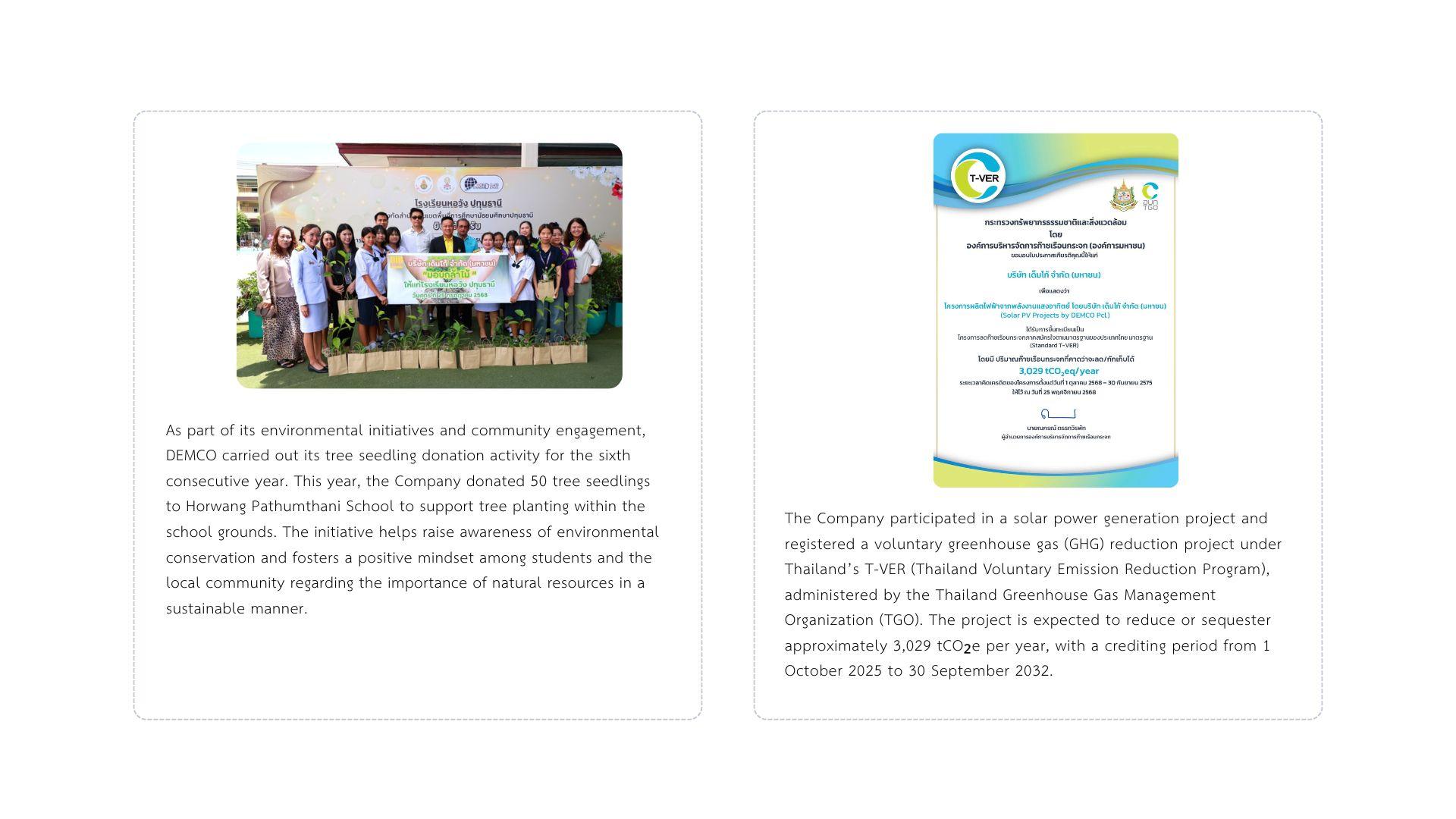
In the same year, Demco participated in a solar power generation project and registered a voluntary GHG reduction project under Thailand’s standards (T-VER), under the supervision of the Thailand Greenhouse Gas Management Organization (TGO). The project is expected to reduce or sequester approximately 3,029 tCO2e per year, with a crediting period from 1 October 2025 to 30 September 2032. This represents an important milestone in building value from carbon credits and supporting the Company’s long-term transition toward a low-carbon organization.
Environmental Legal Incidents
Number of Incidents — Introduction
If the Company and/or its subsidiaries are subject to an investigation by a competent authority regarding potential material non-compliance with environmental laws or regulations, or if the Company is alleged to have caused negative environmental impacts—particularly in cases that become public news and may affect business operations, corporate image and reputation, or the Company’s assets—the Company will provide clarification and disclose information, as appropriate, in a transparent and timely manner. Such disclosure will cover relevant facts, the progress of the investigation, underlying reasons, actual or potential impacts, as well as preventive measures and corrective actions to prevent recurrence.
During the past year, the Demco Group did not identify any incidents of material violations of environmental laws or regulations, and there were no cases involving adverse environmental impacts that affected the Company’s business operations, corporate image and reputation, or assets in any manner.
Legal Violation Incidents
| Metric | Current Year | Previous Year | Two Years Ago |
|---|---|---|---|
| Number of cases or incidents of legal violations or negative environmental impact (cases) | 0 | 0 | 0 |
Human Rights Due Diligence
Introduction
Demco places strong emphasis on comprehensive human rights due diligence to assess and manage potential human rights risks and impacts arising from its operations throughout the value chain—from planning and procurement to project execution, as well as the management of contractors and business partners. The Company implements its human rights policy in line with relevant international principles, and regularly monitors, evaluates, and reports progress to ensure that operations are conducted ethically and transparently, with respect for the dignity of all stakeholder groups.
Conducts Human Rights Due Diligence
Yes
Due Diligence Description
Demco has established a human rights management approach covering all of the Company’s activities, its affiliated business units, and parties across the business value chain. This approach is guided by the Demco Group’s Human Rights Policy and relevant international standards and principles to ensure that Demco’s business is conducted ethically, transparently, and with social responsibility.
To maximize the effectiveness of human rights implementation, Demco prepares an annual Human Rights Due Diligence (HRDD) plan and conducts Human Rights Risk and Impact Assessments on a regular basis. The objective is to systematically identify risks, define preventive measures, and mitigate potential impacts arising from business operations, enabling timely responses to current circumstances.
In addition, Demco has established a process for the regular reporting of assessment results and performance outcomes to enhance transparency and strengthen confidence among all stakeholder groups.
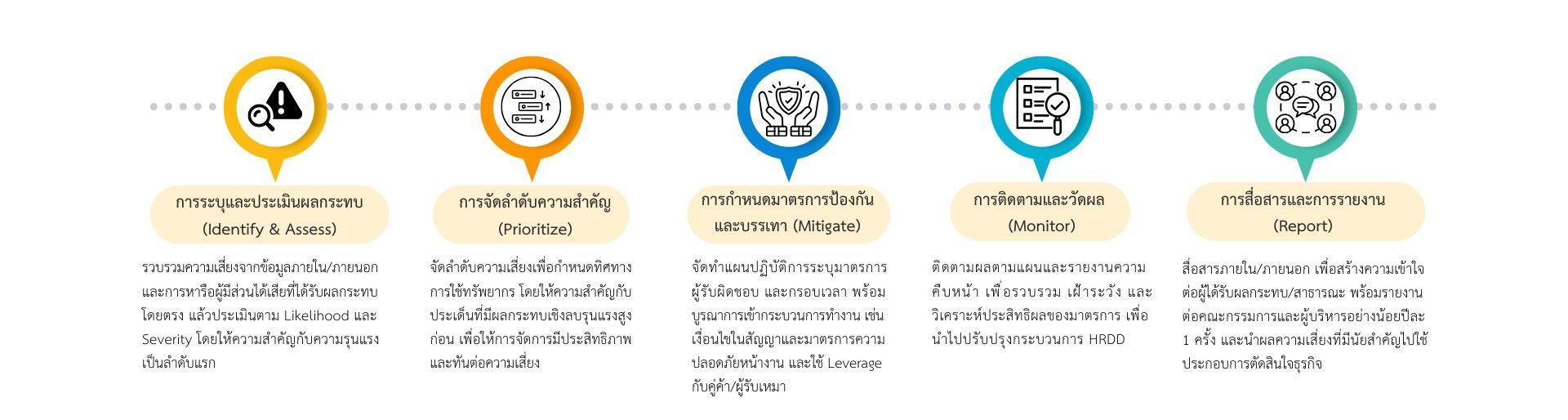
Demco conducts a comprehensive Human Rights Risk Assessment (HRRA) to identify and evaluate actual or potential human rights risks arising from the Company’s operations. The assessment covers activities across the Demco Group and relevant stakeholders throughout the value chain, including business partners and contractors. Risk levels are assessed based on two key dimensions—likelihood of occurrence and severity/impact—to prioritize material issues and define appropriate, ongoing prevention and mitigation measures.
Human Rights Risk Assessment Results
Based on the 2025 assessment, most human rights issues were classified as medium risk, including illegal labor practices (1.1, 2.1) and health and safety (1.2, 2.2, 3.1). Issues assessed as low risk included discrimination (1.3, 2.3) and data leakage (1.4, 2.4). The assessment did not identify any human rights issues classified as high risk.
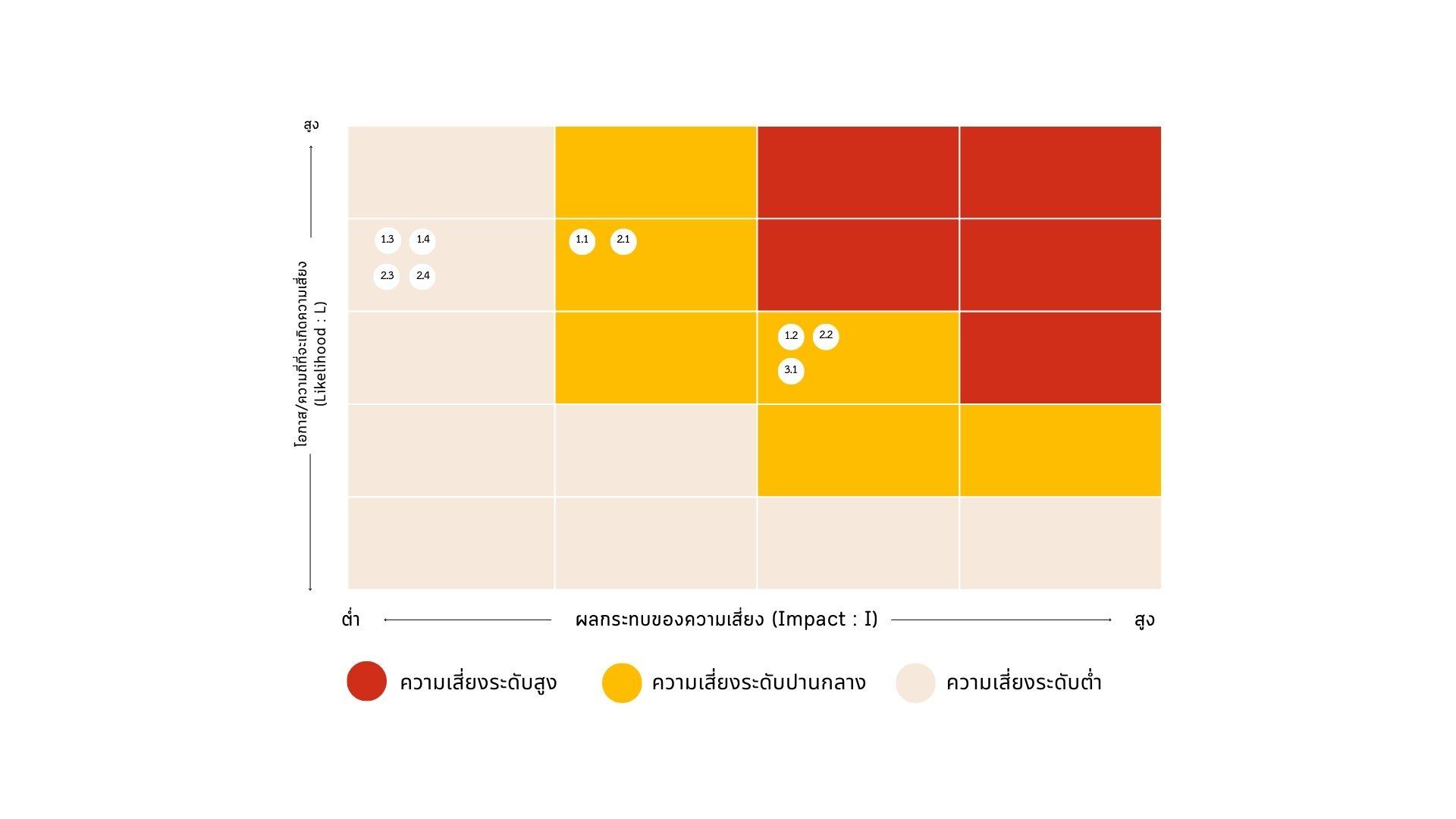
As the assessment did not identify any human rights issues classified as high risk, Demco focuses on managing medium-risk issues by integrating them into the Company’s management systems to define appropriate preventive and impact mitigation measures. In this regard, Demco places emphasis on reducing and controlling both the likelihood of occurrence and the severity of potential impacts on stakeholders throughout the business value chain. Further details are available in the 2025 Sustainability Report.
Employee Management — Overview
Introduction
Human Resources Management Policy
Demco recognizes that employees are a valuable resource and play a critical role in driving the business forward. Accordingly, the Company’s human resource management policy focuses on enhancing employee readiness and capabilities in alignment with the Company’s direction and strategy, while taking into account changes in the global economic, social, and technological landscape. The policy not only promotes the development of essential skills and knowledge, but also provides opportunities for employees to fully realize their potential, while strengthening motivation and engagement between the Company and its workforce.
Employee Retention
Fair Labor Practices
Demco ensures fair treatment of workers and conducts recruitment and employment in a transparent manner based on capability and suitability, without discrimination. The Company supports local employment at project sites to reduce labor relocation and promote income distribution to communities, while providing safety awareness and ensuring equal protection of labor rights.Proactive Recruitment
Demco undertakes proactive recruitment to ensure timely workforce availability aligned with organizational direction, reducing the risk of labor shortages during peak workloads. This approach also enhances hiring quality and mitigates labor constraints during periods of increased projects or urgent assignments.Compensation and Benefits
Demco places importance on employee welfare and benefits to support quality of life and strengthen work motivation, while ensuring fairness and equality. The Company provides comprehensive and equitable compensation and benefits to attract and retain talented employees on a sustainable basis. Compensation and benefits are administered fairly, with performance evaluations conducted twice a year based on clearly defined KPIs and competencies.Employee Voice and Grievance Mechanisms
Demco encourages employees to share feedback, suggestions, and concerns. In the event of issues between employees or between employees and supervisors regarding work practices, employees may raise grievances or report concerns (whistleblowing) through multiple channels, such as suggestion boxes and the Employee Engagement Survey. Responsible parties handle matters in accordance with established procedures. Employees who report concerns in good faith are protected and will not be subject to dismissal or any disciplinary action that could adversely affect them or related persons.Employee Engagement
Employee participation is a key driver of organizational success, enabling employees to feel a sense of belonging and to provide candid feedback for continuous improvement. Demco conducts an Employee Engagement Survey twice a year, guided by transparency, independence, and confidentiality of responses, and uses the results to analyze and strengthen engagement and satisfaction drivers across key dimensions. The Company also promotes work–life balance by offering flexible working hours (9 working hours per day including a 1-hour break) through the Empeo Application, supporting employee well-being and happiness. This contributes to stronger engagement and lower turnover. In 2025, the average employee satisfaction and engagement score was 4.39 out of 5, unchanged from 2024.Succession Planning for Key Positions
Demco has policies to ensure the establishment of a succession plan for senior management positions and individual development plans (IDPs) to prepare successors. Assessment results are linked to development actions to strengthen capability and ensure organizational continuity.
Employees — Plan & Guidelines
Introduction
One of the key challenges in workforce capability development today is ensuring that employee knowledge and competencies remain aligned with the Company’s strategic direction. In 2025, the Company advanced its “Smart Energy” approach and new business models driven by innovation, which required preparing employees to effectively navigate and adapt to these changes. Demco therefore reviewed and updated its training plans across all levels to enable employees to adjust and develop a deeper understanding of the Smart Energy context—enhancing relevant knowledge, capabilities, and perspectives on emerging business models. The Company emphasized strengthening job-critical skills and establishing clear development pathways to deliver tangible outcomes.
In addition, Demco places importance on assigning roles that match employees’ potential and providing fair and transparent career advancement opportunities under clear human resource management policies and practices, thereby supporting stable and sustainable business execution.
Has an Employee Management Plan
Yes
Plan Description
Employee Capability Development
Demco promotes continuous learning and capability development to prepare employees to support organizational growth. The Company establishes an annual Training and Development Plan and implements Knowledge Management (KM) to encourage participation in learning and knowledge exchange and to ensure broad access to learning resources. Demco regularly monitors, evaluates, and enhances its KM processes, and provides diverse learning tools and formats, such as online training via Zoom and/or Microsoft Teams, Knowledge Sharing activities, and Self-Learning channels.
For new employees, Demco provides orientation programs to build an understanding of behaviors and attitudes aligned with the corporate culture, and monitors on-the-job training to assess readiness and performance across all levels. In addition, the Company supports reskilling and upskilling to enable employees to strengthen existing capabilities and develop future skills aligned with evolving industry trends and job requirements. Employee development is structured across three main areas:
Competency-based skills (Soft Skills)
Technical Skills
Managerial Skills
Promoting Employee Relations and Engagement
Demco continuously fosters employee relationships and engagement throughout the year through a variety of constructive activities. These include preserving cultural traditions, celebrating organizational achievements, and internal communication initiatives to ensure that policies, vision, and goals are communicated effectively to employees at all levels, while providing forums for feedback and dialogue. The Company also organizes activities that promote well-being and teamwork, contributing to a positive work environment, stronger organizational commitment, and sustainable shared growth.
Occupational Health and Safety
Demco is committed to ensuring a good quality of life for employees and all parties involved in its operations through effective management of occupational health, safety, and the working environment, which is a key factor in sustainable development and improved operational performance. The Company promotes and supports hygienic and safe working conditions in accordance with its policies, applicable laws and requirements, and relevant international standards, with the goal of achieving zero accidents. Demco also seeks to reduce the risk of work-related illnesses affecting employees and stakeholders across the value chain, and continuously enhances its occupational health and safety management system.
Plan Areas
| Plan Area |
|---|
| Employee training and development |
| Promoting employee relations and participation |
| Occupational health and safety in workplace |
Employees — Workforce
Introduction
Demco implements a transparent and systematic recruitment and employee selection process, taking into account applicants’ qualifications, capabilities, and attitudes in alignment with job requirements and the Company’s values. The process is conducted on the basis of equality and fairness, without discrimination on the grounds of gender, disability, age, educational institution, religious beliefs, or political views. Demco also promotes equal career advancement opportunities without discrimination based on gender, age, educational institution, or disability. In 2025, Demco employed a total of 352 employees.
Workforce Data
| Metric | Current Year | Previous Year | Two Years Ago |
|---|---|---|---|
| Total number of employees (Persons) | 352 | 373 | 383 |
| Number of male employees (Persons) | 210 | 222 | 237 |
| Number of female employees (Persons) | 142 | 151 | 146 |
| Total employment of disabled persons (people) | 0 | 1 | 2 |
| Total disabled employees (people) | 0 | 1 | 2 |
| Total male disabled employees (people) | 0 | 1 | 2 |
| Total female disabled employees (people) | 0 | 0 | 0 |
| Total disabled workers who are non-employee (people) | 0 | 0 | 0 |
| Contributions to the fund for promoting and improving the quality of life for disabled persons | 1 | 1 | 1 |
| Total number of male employees in operational level (Persons) | 165 | 189 | 195 |
| Total number of male employees in management level (Persons) | 28 | 18 | 24 |
| Total number of male employees in executive level (Persons) | 17 | 15 | 18 |
| Total number of female employees in operational level (Persons) | 126 | 140 | 133 |
| Total number of female employees in management level (Persons) | 14 | 9 | 10 |
| Total number of female employees in executive level (Persons) | 2 | 2 | 3 |
Employees — Remuneration & Provident Fund
Remuneration & Provident Fund
| Metric | Current Year | Previous Year | Two Years Ago |
|---|---|---|---|
| Total disabled employees (people) | 17,227,957.32 | 18,141,839.26 | 19,545,801.35 |
| Total male employee remuneration (Baht) | 12,021,140.22 | 13,038,243.98 | 14,539,783.9 |
| Total female employee remuneration (Baht) | 5,206,817.1 | 5,103,595.28 | 5,006,017.45 |
| Number of employees eligible to participate in PVD (persons) | 326 | 334 | 336 |
| Total number of employees joining employee provident fund (Persons) | 245 | 229 | 265 |
| Percentage of total number of employees joining employee provident fund to total number of employees (%) | 69.6 | 61.39 | 69.19 |
| Number of PVD members / Total eligible employees (%) | 75.15 | 68.56 | 78.87 |
| Total amount of provident fund contributed by the Company (Baht) | 223,741.9 | 2,516,224.34 | 2,587,085.36 |
| Total amount of provident fund contributed by employee (baht) | 826,944.1 |
Employees — Training & Development
Introduction
Demco promotes continuous employee learning to support organizational growth by establishing an annual Training and Development Plan and implementing Knowledge Management (KM) within the organization. The Company encourages employees to actively participate in learning, while continuously monitoring, evaluating, and improving its knowledge management processes. Demco also develops diverse learning formats and tools, such as online training via Zoom and/or Microsoft Teams, Knowledge Sharing activities, and self-learning channels (Self-Learning).
In addition, Demco provides orientation programs to help new employees develop behaviors and attitudes aligned with the Company’s corporate culture. The Human Resources function then monitors and evaluates on-the-job training (OJT) to assess the readiness and performance effectiveness of new employees at all levels. Furthermore, Demco implements reskilling and upskilling programs to enable employees to enhance their knowledge and work skills through self-development and to strengthen competencies aligned with their job roles.
Training Data
| Metric | Current Year | Previous Year | Two Years Ago |
|---|---|---|---|
| Average employee training hours (Hours / Person / Year) | 23.07 | 31.3 | 33.85 |
| Employee development and training expenses (baht) | 1,246,944.95 | 1,620,579.21 | 1,424,879.09 |
Employees — Occupational Health & Safety
Introduction
Safety, Occupational Health, and Working Environment
Demco is committed to implementing occupational health, safety, and working environment (OHSE) activities under the slogan, “Standards and Safety are the Heart of Our Operations.” The Company requires all employees and workers to strictly comply with Demco’s OHSE policy in accordance with applicable laws and regulations, including the relevant legal framework on occupational safety, health, and working environment management (B.E. 2549). Demco has also established a Safety Committee, which holds meetings at least once a month to report performance and provide recommendations for corrective actions to ensure legal compliance and alignment with workplace safety standards. The Company actively promotes OHSE activities, continuously monitors safety performance, and uses the resulting information to support ongoing planning and improvement.
In 2025, Demco continued to prioritize the enhancement of its OHSE management system, building on its participation in the workplace development program aligned with OHSE management system standards. In the previous year, Demco received certification for its OHSE management system from the Thailand Institute of Occupational Safety and Health (Public Organization) at the Silver Level.
The certification is valid for three years. During this period, Demco remains committed to maintaining compliance with the prescribed standards, while implementing plans to further develop and improve its OHSE management system in order to achieve a higher level of certification in the future—reinforcing the Company’s commitment to providing a safe and sustainable working environment for employees and all relevant parties.
Occupational Health & Safety Data
| Metric | Current Year | Previous Year | Two Years Ago |
|---|---|---|---|
| Total number of lost time injury incidents by employees (Cases) | 2 | 4 | 4 |
Employees — Labour Relations
Introduction
Demco conducts an Employee Engagement Survey twice a year under a process designed to ensure transparency and credibility, including independence and strict confidentiality of employee feedback. Survey results are used to enhance and improve key areas, particularly employee engagement and the drivers of engagement and satisfaction, such as organizational pride, career opportunities, and quality of work life. The Company summarizes and analyzes the results objectively and has a policy of using employee feedback to improve work processes, implement constructive activities, and further develop the organization to high standards, while providing employee care and practices comparable to peers in the same industry. Demco believes that its employees are a critical mechanism enabling the Demco Group’s sustainable growth.
In 2025, the average employee engagement and satisfaction score was 4.39 out of 5, unchanged from 2024. The employee turnover rate in 2025 was 7.39% of the total workforce.
Labour Relations Data
| Metric | Current Year | Previous Year | Two Years Ago |
|---|---|---|---|
| Total voluntary resignations (Persons) | 26 | 36 | 36 |
| Male employees who voluntary resigned (Persons) | 15 | 21 | 16 |
| Female employees who voluntary resigned (Persons) | 11 | 15 | 20 |
| Percentage of employee turnover leaving the Company voluntarily (%) | 7.39 | 9.65 | 9.4 |
| Evaluation result of employee engagement | 1 | 1 | 1 |
Employees — Employee Representation
Introduction
Demco places importance on employee participation in the management and enhancement of internal welfare and benefits. The Company has established a Welfare Committee as a representative body for employees at all levels. The Committee plays an important role in reviewing, overseeing, and improving employee welfare and benefits to ensure appropriateness and alignment with employee needs, while promoting equality and participation in fostering a positive and sustainable working environment.
Employees Are Represented Collectively
Yes
Forms of Representation
| Form |
|---|
| Welfare committee |
Employees — Targets
Has Set Employee Targets
Yes
Targets
| Indicator | Target Areas | Target Year | Target Year — Description |
|---|---|---|---|
| All employees receive training to develop their skills and abilities. | 2984 · Description: Employee training and development | 2,025 | 12 hours/person/year |
Employees — Performance & Outcomes
Has Performance Results
Yes
Performance Description
In 2025, Demco conducted a total of 306 employee training courses in accordance with the Training and Development Plan, with the objective of developing and enhancing skills (Upskill & Reskill), as well as building upon new skills essential for the future (Future Skills) to align with industry changes. The aforementioned training is divided into 3 key areas based on knowledge and skill types, namely:
1. Competency Skills (Soft Skill)
-
Training course "Effective Presentation"
-
Training course "Understanding Scams and Online Threats"
-
Training course "Social Security Knowledge in Enterprises"
-
Training course "Financial Statement"
-
Training course "Data Management for Artificial Intelligence (AI for Management)"
-
Training course "Collection and Accumulation of Employee Welfare Fund Contributions and Line Supervisors with Employee Discipline Management"
-
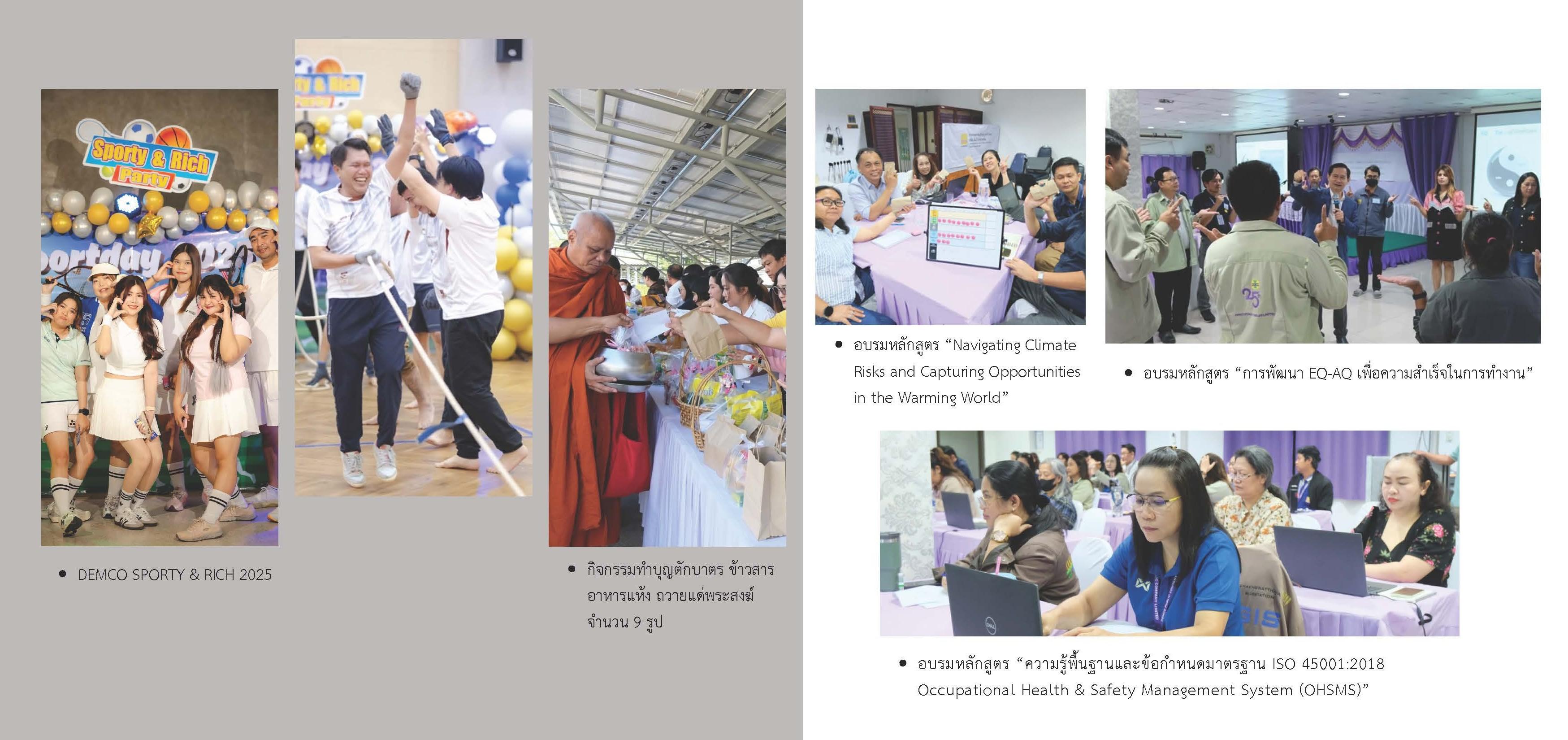
Training course "Developing EQ-AQ for Work Success"
2. Technical Work Skills (Technical Skill)
-
Training course "Safety Officer at Management Level (Safety Officer - Management)"
-
Training course "Internal Audit of Quality Management System (ISO 9001:2015)"
-
Training course "Review of Work Safety Related to Cranes"
-
Training course "Effectiveness of Internal Control System"
-
Training course "Basic Knowledge and Requirements of ISO 45001:2018 Occupational Health & Safety Management System (OHSMS)"
3. Management Skills (Managerial Skill)
-
Seminar Senior Management "Opportunity Management Process"
-
Training course "Navigating Climate Risks and Capturing Opportunities in the Warming World"
-
Activity "Strategic Business Plan Development for 2026 (Business Strategy Workshop 2026)"
-
Training course "Human Resource Management for Non-HR Managers (HR for Non-HR)"
Customer Management — Overview
Introduction
Importance
Demco strictly complies with the requirements and practices stipulated in its “Good Corporate Governance and Business Ethics Policy” with respect to delivering products and services that meet quality standards, are delivered on time, and, where possible, exceed customer expectations under fair terms and conditions. The Company provides customers with accurate, sufficient, and timely information about Demco to support informed decision-making.
Another key aspect is the protection of customer confidentiality. Demco adheres to its confidentiality policy and code of conduct on safeguarding confidential information, record retention, and the use of inside information. This includes protecting customer data and trade secrets, and ensuring that no information is used improperly for personal benefit or for the benefit of related parties.
Furthermore, Demco responds to customer needs promptly and has established effective systems and channels for customers to submit complaints regarding the quality of products and services. The Company also conducts customer satisfaction surveys and consolidates the results for analysis, which are used to support quality system reviews and continuous improvement.
Customers — Plan & Guidelines
Has a Customer Management Plan
Yes
Plan Description
Demco Customer Management Plan
1. Strengthen customer engagement
• Commit to building strong customer relationships through prompt access and response to customer needs
• Organize meetings or customer visits to gather feedback and gain in-depth understanding of customer needs
2. Deliver quality products and services
• Elevate production and service standards to ensure customers receive the best possible experience
• Emphasize punctuality and reliability in product and service delivery
3. Offer sustainable products and services
• Develop products and services that promote sustainability, such as using environmentally friendly materials
• Provide transparent information regarding product origins and production processes
4. Survey customer satisfaction
• Conduct annual customer feedback and satisfaction surveys to measure results and improve operations
• Organize activities or programs to strengthen relationships and trust between the company and customers
5. Prompt and accurate complaint resolution
• Establish an efficient complaint management system to respond promptly to customer issues
• Record and analyze complaints to improve future operations
6. Customer data care and retention
• Meticulously and securely manage contract data, sales agreements, and important documents
• Comply with laws and regulations concerning personal data protection to maintain customer trust
Plan Areas
| Plan Area |
|---|
| Responsible production and services for customers |
| Protection of customer personal information |
Customers — Satisfaction Results
Introduction
Demco places high importance on conducting business with customers, regularly conducting annual customer satisfaction surveys to consistently enhance customer engagement and relationships. These surveys also serve as a guideline for accurately and promptly resolving customer complaints. The survey results are presented to the Executive Board meeting to be used as a guideline for planning, managing, developing, and improving the quality of delivery and services, as well as for disseminating information and responding to customer feedback to relevant departments.
Customer satisfaction surveys are divided into 3 phases:
• Phase 1: After Bid Submission (within 15 business days after official bid results are known)
• Phase 2: During Project Implementation (when work progress is approximately 50%)
• Phase 3: Project Closure (within 15 business days after the final invoice is issued)
In 2025, overall customer satisfaction was found to be 96.76%, significantly exceeding the target of 85%. This result reflects the success in efficiently managing customer relationships, coupled with a continuous commitment to developing product and service quality. This survey, therefore, serves as proof of Demco's dedication and genuine intent to elevate service standards to fully meet customer needs, while building long-term confidence and trust.
Demco remains committed to business principles that prioritize customer satisfaction, continuously striving to improve service quality to create the best possible experience for all customers.
Customer Satisfaction Results
| Metric | Current Year | Previous Year | Two Years Ago |
|---|---|---|---|
| Evaluation results of customer satisfaction | 1 | 1 | 1 |
Customers — Targets
Has Set Customer Targets
Yes
Targets
| Indicator | Target Areas | Target Year | Target Year — Description |
|---|---|---|---|
| Customer Satisfaction Level | 3009 · Description: Development of customer satisfaction and customer relationship | 2,025 | >85 percent |
Customers — Performance & Outcomes
Has Performance Results
Yes
Performance Description
Operational performance and customer management outcomes.
In 2025, it was found that overall customer satisfaction was at 96.76%, which is clearly higher than the set target of 85%. Such results. Reflecting the success in customer relationship management. effectively, coupled with a commitment to continuous development of product and service quality. This survey therefore serves as proof of Demco's dedication and genuine intent to elevate service standards. to fully meet customer needs, while building long-term confidence and trust. Demco remains committed to business principles that prioritize customer satisfaction. And continues to relentlessly develop service quality to create the best experience for all customers.
Demco strictly supervises, prevents, and protects customer data, having established policies. management of confidential information and information that may affect securities prices, and policies for. confidentiality agreements, including guidelines for managing and retaining contract data, and maintaining. confidentiality and data usage. Furthermore, regarding the personal data of executive directors. or employees of client companies, Demco has planned, analyzed, and operated. for compliance with the Personal Data Protection Act B.E. 2562 (2019). Demco. No instances of customer data breaches have been found, and there have been no complaints regarding customer data protection.
Customer Training. The company has. Organized Customer Training activities, which are part of. The delivery of construction projects to customers, totaling 10. projects. To provide knowledge on installation, maintenance. and the correct and safe use of electrical equipment.
Customer relationship-building activities, organizing activities. Badminton and football competitions. to strengthen close relationships between the company and customers in a friendly atmosphere, while promoting long-term cooperation.
The. Visit EV Station projects: The company took customers to visit the results. construction of power stations, along with providing advice on the process. Listening to feedback, inquiring about sales satisfaction and. services, to improve and develop better services, and. Build confidence and strengthen trust in decision-making. Invested jointly with the company.
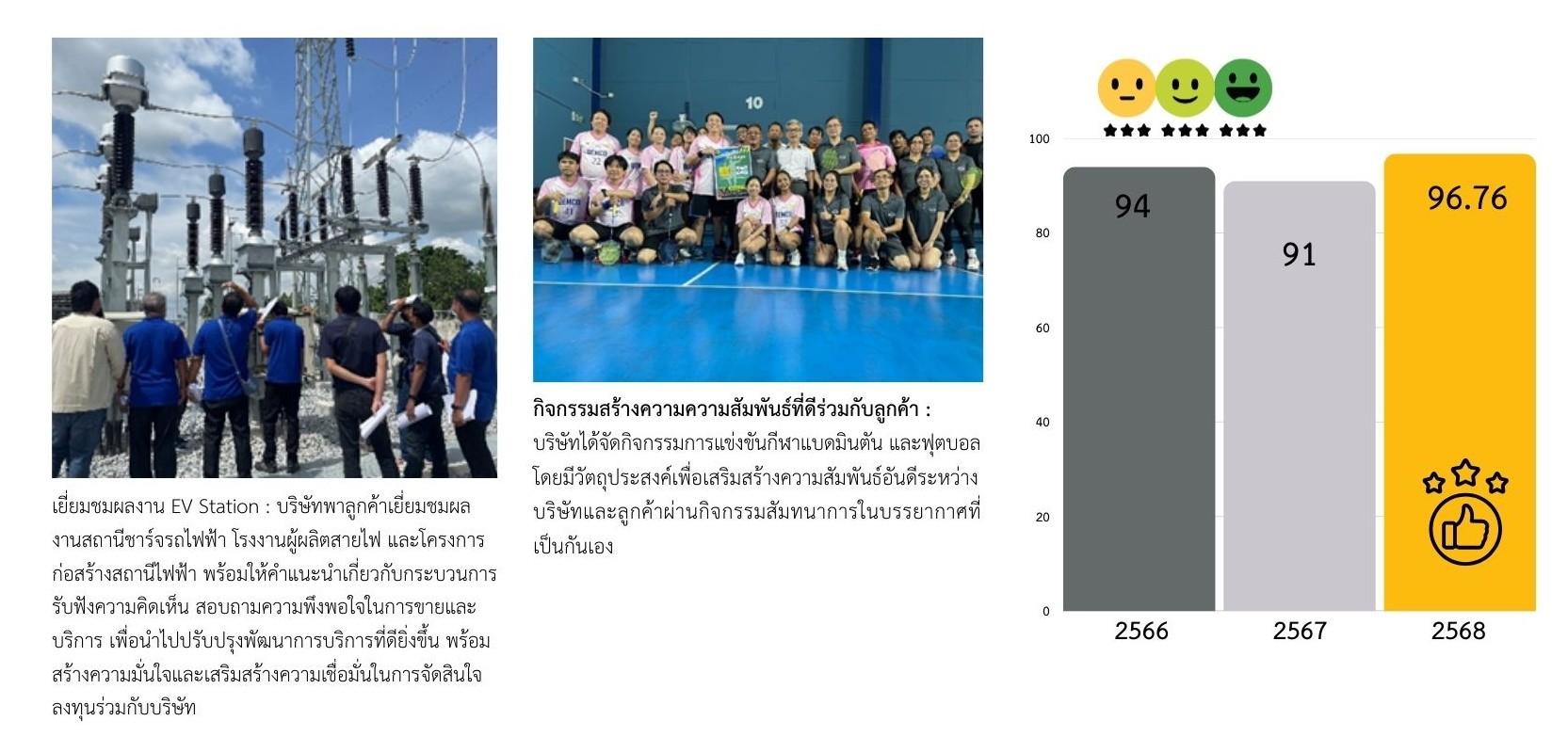
Community & Social — Overview
Introduction
Importance
Demco continuously conducts its business with care and responsibility towards the community through creating benefits for society and fostering community participation in its operational areas. Demco operates under its corporate sustainability development policy and has established a stakeholder engagement policy that emphasizes communication, interaction, and appropriate engagement with all stakeholder groups, both internal and external, especially those stakeholders in close proximity to the operational areas of the Demco Group.
Community & Social — Plan & Guidelines
Introduction
Social and Community Strategy
-
Invest in developing the potential and capabilities of employees by supporting training, knowledge, and necessary resources, while creating a safe working environment, stimulating creative thinking, and enabling them to work to their full potential and capacity.
-
Respond to customer needs to ensure satisfaction, both in terms of quantity and quality of products and services, fully in accordance with agreements.
-
Strengthen and promote the participation of communities and relevant stakeholders by openly listening to opinions, engaging in transparent and constructive consultations, treating each other equally, and respecting differences, as well as supporting the development of quality of life and community strength. Collaborate with government agencies, industry associations, business partners, civil society, and other stakeholders to contribute to the development and/or application of good sustainability standards and practices in various industries and/or sectors.
Has a Community & Social Plan
Yes
Plan Description
Community and Social Management Plan for Donations
1. Sports and Recreation
Demco prioritizes being an integral part of the communities in which it operates by continuously participating in social and public benefit activities with local authorities, communities, and network partners. This is done to promote a good quality of life, support community development, and build strong relationships with local stakeholders. The company aims to conduct activities appropriately, in line with the context of each area, and with consideration for the participation of employees and the community, to foster sustainable mutual benefits.
2. Community Education Project
Demco provides appropriate support and assistance to society and communities at both local and national levels, encouraging employees to participate in activities that reflect responsibility towards the community, society, and the environment, thereby concretely enhancing the quality of life for stakeholders. One significant activity is organizing educational projects for communities through clean energy learning, by applying solar cells to create small toy cars for students at Wat Dao Rueang School. This aims to raise awareness of renewable energy, promote practical learning skills, and support the sustainable development of youth potential in the community.
Plan Areas
| Plan Area | Other — Please Specify |
|---|---|
| Sports and recreation | |
| Others | Community Education Program |
Community & Social — Targets
Introduction
Demco is committed to conducting business that creates value for society and communities by establishing success indicators that reflect social responsibility across all dimensions. The Company emphasizes participation in public initiatives, support for community development, and the promotion of stakeholder well-being through clear targets and continuous implementation, thereby strengthening sustainability and fostering long-term trust between the organization and communities.
Has Set Community & Social Targets
Yes
Targets
| Indicator | Target Areas | Target Year | Target Year — Description |
|---|---|---|---|
| Public service to the community (Man-hours /year) | 3045 · Other name: Public service to the community · Description: Others | 2,025 | > 50 Man Hour / Year |
| Participation in social activities in the community / local area | 3045 · Other name: Participation in social and community activities · Description: Others | 2,025 | 2 activities/year |
| Participation in blood donation by employees and community members | 3045 · Other name: Health Promotion and Volunteerism · Description: Others | 2,025 | 60,000 CC |
| Charitable donation activities | 3045 · Other name: Charitable contributions and social welfare · Description: Others | 2,025 | 2 activities/year |
| Projects or activities for community/social development and assistance | 3045 · Other name: Community Development and Assistance · Description: Others | 2,025 | 1 Project |
Community & Social — Performance & Outcomes
Has Performance Results
Yes
Performance Description
DEMCO recognizes its social and environmental responsibilities. In 2025, the company organized ethical promotion activities to instill awareness and responsibility in work, alongside continuous community, social, and environmental activities. The operational results are summarized as follows:
Participation in community/local activities e.g., participating in religious and traditional activities in the operational area.
Charitable Donations Supported public benefit organizations with goods and resources, exceeding the set target.
Public service to the community Conducted volunteer cleaning activities to develop public areas and foster unity within the organization, as well as giving back to society for nearby communities.
Community/Social Development and Assistance Projects Organized educational activities for the community through the application of solar cells in educational institutions.
Blood Donation In collaboration with Rajavithi Hospital, organized 3 donation drives and invited the community to participate, collecting a total of 56,550 cc of blood.
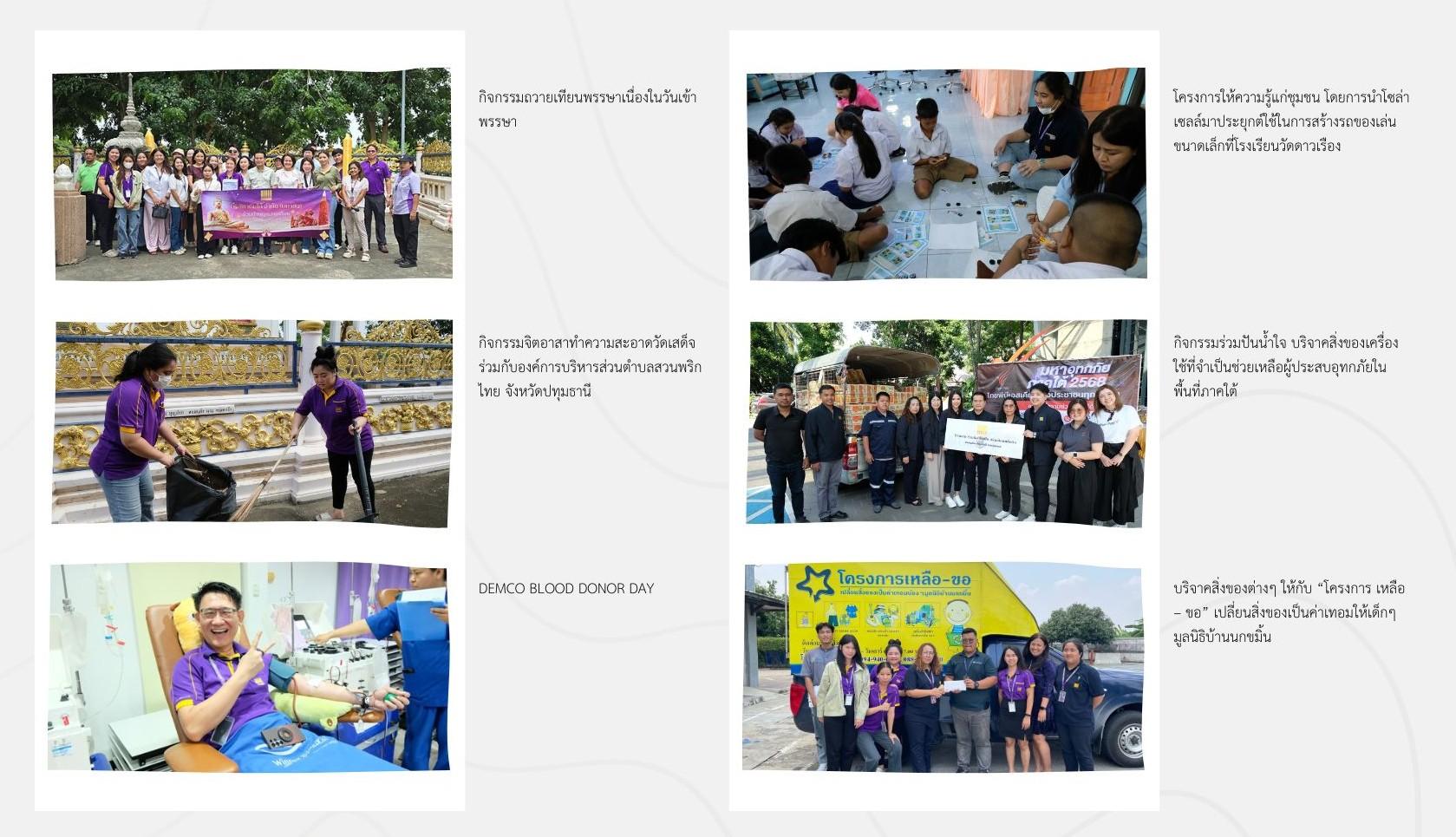
Law Violation Incidents
Law Violation Incidents
| Metric | Current Year | Previous Year | Two Years Ago |
|---|---|---|---|
| The total number of cases or incidents of significant violations of laws or regulations regarding social and human rights (Cases) | 0 | 0 | 0 |
| The total number of cases or incidents that cause significant labor disputes (Cases) | 0 | 0 | 0 |
| The total number of cases or complaints related to consumer rights violations (Cases) | 0 | 0 | 0 |
| The total number of cases or complaints related to partner rights violations (Cases) | 0 | 0 | 0 |
| The total number of cases or incidents that cause disputes with the community/society (Cases) | 0 | 0 | 0 |
| The total number of cases or incidents related to cyber security or customer data breaches (Cases) | 0 | 0 | 0 |
| The total number of cases or incidents related to safety and occupational health at work (Cases) | 0 | 0 | 0 |